‘When a day that you happen to know is Wednesday starts off by sounding like Sunday, there is something seriously wrong somewhere.’
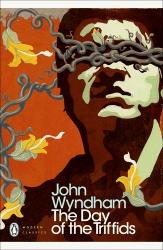
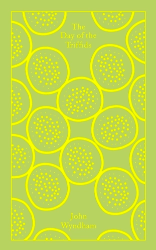
Book blurb
When a freak cosmic event renders most of the Earth’s population blind, Bill Masen – one of the lucky few to keep his sight – finds himself trapped in a London jammed with sightless mobs who prey on those who can still see. But another menace stalks blind and sighted alike. With nobody to stop them the Triffids – walking carnivorous plants with lethal stingers – rise up as humanity stumbles and falls . . .
With its startling imagery of desolate streets and lurching, The Day of the Triffid’s lethal plant life retains its power to haunt today.
The Day of the Triffids, published in 1951, expresses many of the political concerns of its time: the Cold War, the fear of biological experimentation and the man-made apocalypse. However, with its terrifyingly believable insights into the genetic modification of plants, the book is more relevant today than ever before.
My thoughts
Triffids starts off slowly and the language and some of the social attitudes of the book come across as being a little old fashioned and as this book was first published in 1951 that’s no surprise. The story itself is incredibly accessible and relatable to the modern reader. It opens with the main protagonist Bill waking up in hospital wondering where everyone is. He has been in for a treatment on his eyes and is still bandaged up so cannot see. As time goes on he decides that the lack of nurses coming into his room, his hunger and a deep sense of unease means that he needs to take off his bandages and find out what is happening.
Which he does.
Bill finds that an event the previous night a display of comets has left the whole of the hospital’s staff and patients blind! As he leaves the hospital and explores further it is obvious that almost everyone has been blinded. There are a few other people who can see. He has a number of encounters with groups of blind people and some sighted individuals. They are not all pleasant experiences but they add to his understanding of what has and is happening. He meets Josella. The two of them get along and there is an attraction. Then they find a group encamped in a university and join them.
As the story goes along it is one of moral dilemmas. Do you look after yourself or should you help those who are blind? Wyndham writes Bills reasoning well, the conversations between Bill and Josella along with the other characters allows the reader to understand and appreciate the pragmatic approach that Bill and Josella often taken. That is not to say that they don’t appreciate and consider other angles. It is their determination and experiences over time along with their pragmatism that steers them through difficult situations and even when they get separated for a time Bill’s determination ensures they are reunited.
But where are the Triffids?
Well they are about. Indeed, the reason Bill was in hospital was because he got struck by one across the eyes hence the bandage and the reason he wasn’t blinded by the comets. Bill is a biologist and worked with triffids as they had become a valuable resource, this is all explained in the book so no need to go into any detail here. Bill had for a time worked with Walter Lucknor who had a great knowledge of triffids and was the first person to understand that they could not only move, somewhat awkwardly, but were intelligent and could communicate. With the catastrophe of the comet event they had begun to break free from their farms and would attack anyone with their deadly sting. As the months and years pass they are taking over much of the countryside. It was a daily battle to keep them at bay from the home that Bill and Josella had settled into at Shirning Farm which was owned by Dennis and Mary Brent.
The Brent’s were friends with Josella they were blinded in the comet event. They have a baby girl. Bill had helped a young girl, Susan, whilst he was trying to find Josella and she moved into Shirning Farm too. Whilst they lived a reasonably good life at Shirning there was always the fear of being hurt or killed not only by triffids but also from various other communities that had been formed. It is the knowledge that ultimately they would not be able to survive at Shirning Farm that made them consider alternative places to go and then they get two offers to join other groups. One offer felt more like an ultimatum. This made the Shirning group’s mind up but could they evade being forced into an offer they didn’t want? How could they escape? Would they make it to the other groups island? Could they get away without being attacked by triffids or this dangerous group?
This is a chilling and quite believable story (yes there might need to be some small suspension of belief on occasion but nothing that would make me stop reading) told from Bill’s point of view. After the slow start, perhaps because of it, as it’s like reflecting Bill’s gradual awakening to what had and was happening, it sucks you right in and whilst they may not be the most lovable characters, as they do have to take a hard line on some things, they are endearing and you do become invested in what happens to them.
So, yes, I thoroughly enjoyed reading The Day of the Triffids by John Wyndham.
Book: Purchased
Classic spin #44
The Day of the Triffids by John Wyndham** | 1951 | 272pp was the Classic Club Spin 44 (#CCSpin 44) pick. We listed and posted a selection of 20 books from our Classic Club list and whatever number is picked, in this instance it was 9, we read that book and post a review by Sunday, 5th July 2026.
The Classic Club
The Day of the Triffids by John Wyndham is No.18 on my Classic Club list| First published in 1951 | 272pp | My classic club list.
The Classics Club was started on March 7, 2012 by a blogger who wanted to see more people posting about classics literature in the blogosphere. Her goal was to,
“unite those of us who like to blog about classic literature, as well as to inspire people to make the classics an integral part of life.” THE CLASSICS CLUB
She thought about several ideas but finally settled on inviting people to make a list of (at least 50) classic titles they intend to read and blog about within the next five years.
After a few months, the club grew, and it was decided to create a separate site to house everything related to The Classics Club – And this blog was born!
The club moved here in August 2012. So far it has all these members who have read these books.
For more information, please see this page for FAQs on how to join the club, how to submit a post on the Reviews Page, how to submit an event on the Events Page, etc.
#20BOS26
I have listed 20 books to be read over the summer months (June, July and August) it’s a very easy going challenge and as I was reading this book for my Classic Club challenge along with the CCspin No.44 challenge which has to be read and reviewed by 5th July it obviously had to be on my 20BOS26 challenge list. Who doesn’t love a book that counts to multiple challenges?
My #20BOS26 list.
Information
Published: Penguin Books Ltd | ISBN:9780141185415 | 276 pp
Buy: Hive | Bookshop.org (affiliate link) | Amazon | Your local bookshop | Your local library
Author
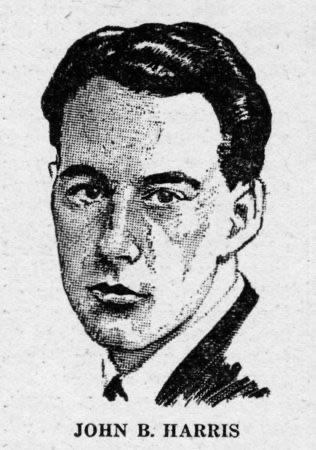
Wyndham/Harris as pictured in the May 1931 Wonder Stories (Penguin)
John Wyndham born July 10, 1903, Birmingham, Warwickshire, Eng.—died March 11, 1969, London) was an English science-fiction writer who examined the human struggle for survival when catastrophic natural phenomena suddenly invade a comfortable English setting. He wrote several short stories before World War II under various names, including Lucas Parkes, John Harris, and Lucas Beynon. It was not until after the war that he began to focus on the themes of disaster, invasion, and evolution under the name of John Wyndham and created two of the most well-known stories of our time–The Day of the Triffids and The Midwich Cuckoos. John Wyndham died in 1969, but his works continue to be read as classics of speculative fiction.
Books
The Day of the Triffids (1951) |The Kraken Wakes (1953) | The Chrysalids (1955) | The Midwich Cuckoos (1957) which was filmed as The Village of the Damned in 1960 | The Trouble With Lichen (1960) | see author pages for full list
Amazon author page| Hive author page | Wikipedia author page | Penguin author page
His short stories are collected in Consider Her Ways (1961) and The Seeds of Time (1969).


8 responses to “The Day of the Triffids by John Wyndham #CCSpin44 #20BOS26”
I have been aware of this book but didn’t really consider reading it because I am not a huge sci fi reader. Your post did make it sound very interesting though and maybe something I should consider
LikeLiked by 1 person
hi Marg, I wouldalso say I’m not a big fan of sci-fi or dystopian books and yet I do read them and often enjoy! Not every book or genre is for everyone but sometimes giving it a chance opens up a whole new world of reading enjoyment, so if you do read Triffids I hope you enjoy it. Janet
LikeLike
I’ve often wondered about this book but not enough to do any research on it. I’m still not sure if it is for me, but now I will do some research. Thank you.
https://headfullofbooks.blogspot.com/2026/06/classic-review-madame-bovary.html
LikeLiked by 1 person
Not every book is for everyone but I’m glad you got some value from this and hope you enjoy your research. Thanks for the link to your blog it looks interesting and I will explore.
LikeLike
[…] The Day of the Triffids by John Wyndham** | 1951 | 272pp (*by Sunday, 5/7) Classic Club Spin 44 (#CCSpin […]
LikeLike
[…] The Day of the Triffids by John Wyndham | 1951 | […]
LikeLike
Glad you enjoyed this one – it’s my favourite Wyndham! I love the way they try to work out what kind of society they want to create now that the old one is gone.
LikeLiked by 1 person
I did, thanks FictionFan. Yes, exactly that – their reasoning. That it took place overs years so that it was hopeful, there was time to consider so that when the decision as to who they should join with felt right and then how it went. Also, the way in which they left the farm was nicely done.
LikeLiked by 1 person