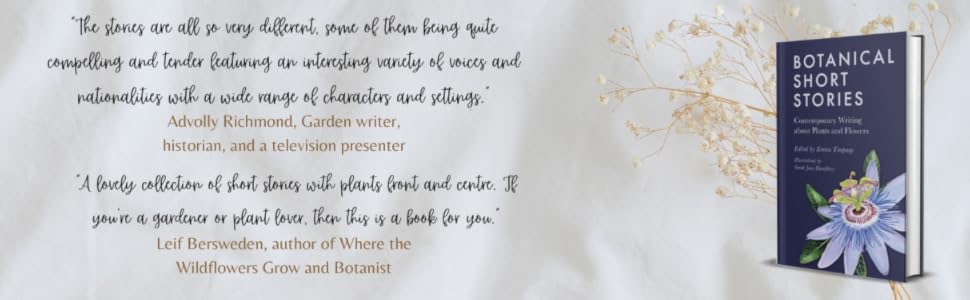
“A lovely collection of short stories with plants front and centre. If you’re a gardener or plant lover, then this is a book for you.” Leif Bersweden botanist and author of Where the Wildflowers Grow

‘The stories are all so very different, some of them being quite compelling and tender featuring an interesting variety of voices and nationalities with a wide range of characters and settings’ – Advolly Richmond FLS Plant, Garden and Social Historian author of A Short History of Flowers
Book blurb
A group of botanists in search of rare species dismiss local custom at their peril.
Love in all its wildness and wonder is found clinging to crumbling chalk cliffs and growing through cracks on city streets.
A scientist takes a radical step to understand her houseplant.
A poet remembers her beloved flowers, and the longing for a magnificent tropical garden outlasts death.
From tokens of love to neolithic burial gifts, bridal bouquets to seasonal wreaths and healing potions to artistic masterpieces, flowers and plants have a multitude of meanings and a long and complex relationship with us.
They brighten our homes and delight us in garden and countryside, convey our emotions and symbolise the stages of our human lives.
Throughout the anthology, interactions with the natural world bring opportunities for new beginnings, transformation, and a chance to heal.
This rich and wide-ranging collection celebrates the deep connection that exists between people and plants in fourteen short stories as varied, diverse, and global as the botanical world itself.
Contents
Introduction by Emma Timpany
The Acorn Vase – Clare Reddaway
Mercy – Kate Swindlehurst
Flowers – Emma Timpany
The Garden of the Non-Completer Finisher – Angela Sherlock
In Search of Monkey Cups – Hildegard Dumper
Dog Roses – Tamar Hodes
Mulch – Rebecca Ferrier
Breathing Becoming Midori – Aulic Anamika
Narcissus – Maria Donovan
A Clear View – Mark Bowers
Nigella – Thalia Henry
A Homesick Ghost Princess Visits Her Home on a Full Moon Night – Priyanka Sacheti
Emily – Hiding in a Flower – Diana Powell
Stitching for Clem – Elizabeth Gibson
Notes | Acknowledgements | The Contributors (see below)
My thoughts
Perhaps I should first address choosing this anthology as part of Novella November. It is simply that the complete anthology including contents, notes and so on comes in at a total 202 pp with the stories, fourteen in all, taking up 170 pp. I think it is a perfectly good choice and I know that our hosts, Cathy and Rebecca, are very inclusive with regards to what can be read in this challenge.
The anthology is edited and includes a story by Emma Timpany whose books Travelling in the Dark and Three Roads I have previously read and shared my thoughts on. I bought the ebook of Botanical Short Stories some time ago as I have loved Emma’s work and thought this anthology would be a good addition to my small collection of her short stories. I also loved the idea of a botanical anthology – flowers, trees, plants and gardens are a joy to look at, appreciate, to grow and now to read about. And reading it is what I kept meaning to do and at last I have!
I thought that I would take two or three of these short stories to chat about but as I read – and reread, because rereading is inevitable as it’s so good – this anthology, these stories became impossible for me to choose between.
Of course, Emma’s story Flowers was a joy to read as two souls meet and heal over planting and growing flowers. The narrator arranges to tend a plot of land to grow flowers to cut for her floristry work, the owner of the land is recovering from an illness and slowly building his strength. We discover their stories as time passes and how each find healing from working the land.
The anthology opens with The Acorn Vase by Clare Reddaway a woman who has lived for many years in her home in Wales has a fall when walking. It’s an opportunity for her children, who grew up in that home in Wales, to demand she sells up and move closer to them. The woman is a compelling voice and I really disliked the way in which she was being bullied by her children into moving but then she has a conversation with her daughter and my perspective shifted! A skilfully told and lovely story.
Then there’s the excellent Mercy from Kate Swindlehurst.
The Garden of the Non-Completer Finisher by Angela Sherlock is charming, funny and a wonderful piece on English village life. Hildegard Dumper’s enjoyable In Search of Monkey Cups is set in Malaysia and shows how searching for a rare species can be quite dangerous especially if you don’t heed the local beliefs or you wander too far away. In Dog Roses by Tamar Hodes a relationship is under threat when a flower is stolen from a friend’s garden. As we learn why we also find that fear can be undone by love in this glorious story.
Mulch by Rebecca Ferrier is a mind blowing piece in which Jay grows herself a man! Life can be hard, isolating when you don’t conform not that Jay cares or does she? She just wants someone like herself to be with. Someone who loves the earth, the plants as she does but will she love what she gets?
Breathing Becoming Midori by Aulic Anamika is a fantastical and fantastic piece that takes us into a world where you can live in and indeed become your animal, your plant although it’s not an easy transition and the plant might have something to say about it! Species jumping can only be found on the dark web but be warned you may not return!
What does it cost to have those wonderful bulbs appear in our garden centres week in week out all year round? In the absolutely fascinating Narcissus from Maria Donovan we find out what it’s like to work in a bulb packing factory.
In A Clear View Mark Bowers brings a story of friendship and the beauty of life. Whilst Nigella by Thalia Henry brings us the charming and incredibly poignant story of Tilly’s friendship with Mr Collier.
We then have the otherworldly A Homesick Ghost Princess Visits Her Home on a Full Moon Night from Priyanka Sacheti a beautiful visitation of the ghostly princess owner of a house and garden, now open to the public, who considers the past, the present and what may be to come as she glides through her garden recalling happy and sad memories.
The final two stories bring the anthology to a strong close. Emily – Hiding in a Flower by Diana Powell is a beautiful contemplation on flowers in honour of and dedicated to Emily Dickinson which I loved but perhaps the best was saved ‘til last Elizabeth Gibson’s Stitching for Clem is a truly delightful story.
What an impressive collection of short stories this is, very well compiled and edited it’s certainly worthy of attention, the stories are beautifully written, they bring the joy, the wonder – and sometimes the danger – found in flowers, plants and trees to the heart of each of these tales. I really enjoyed reading Botanical Short Stories and would highly recommend it.
#NovNov2025
#NovNov2025 is co-hosted by Cathy @Cathy746books and Rebecca @bookishbeck to join just post a joining in blogpost and add the link via either of the hosts Link-up post (click on links above).
My post will have each link of my reads added can be found here: My Novella November reads
Information
Published: The History Press | 4th April 2024 | 202 pp | ISBN: 9781803993096
Buy: The History Press | Amazon | Bookshop.org (affiliate link) | Hive | Waterstones | Blackwell’s | botanical book specialist Summerfield Books| Foyles | Your local library | Your local bookshop
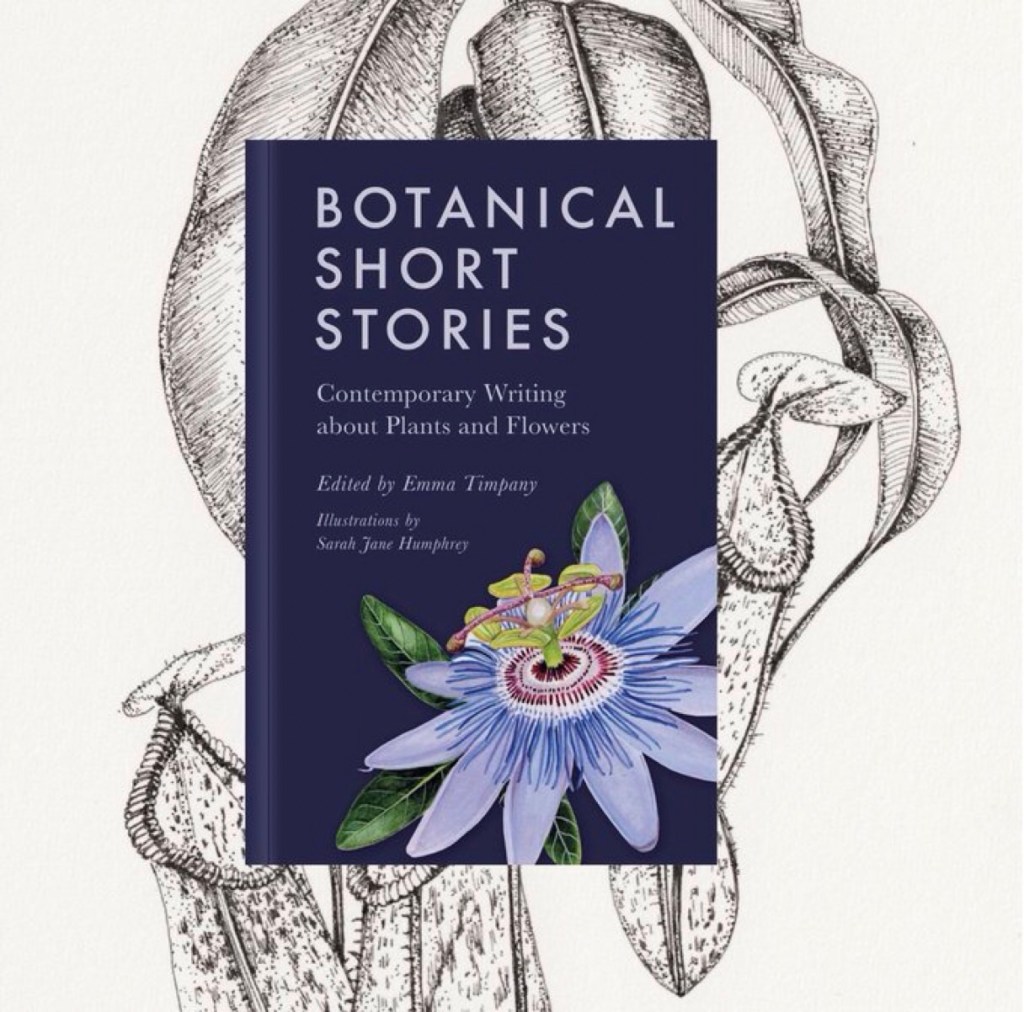
Editor
Emma Timpany was born and grew up in the far south of Aotearoa New Zealand. She lives in Cornwall. Her publications include the short story collections Three Roads (Red Squirrel Press) and The Lost of Syros (Cultured Llama Publishing) and the novella Travelling in the Dark (Fairlight Books). She is editor and co-editor respectively of the anthologies Botanical Short Stories: Contemporary Writing about Plants and Flowers and Cornish Short Stories: A Collection of Contemporary Cornish Writing for The History Press.
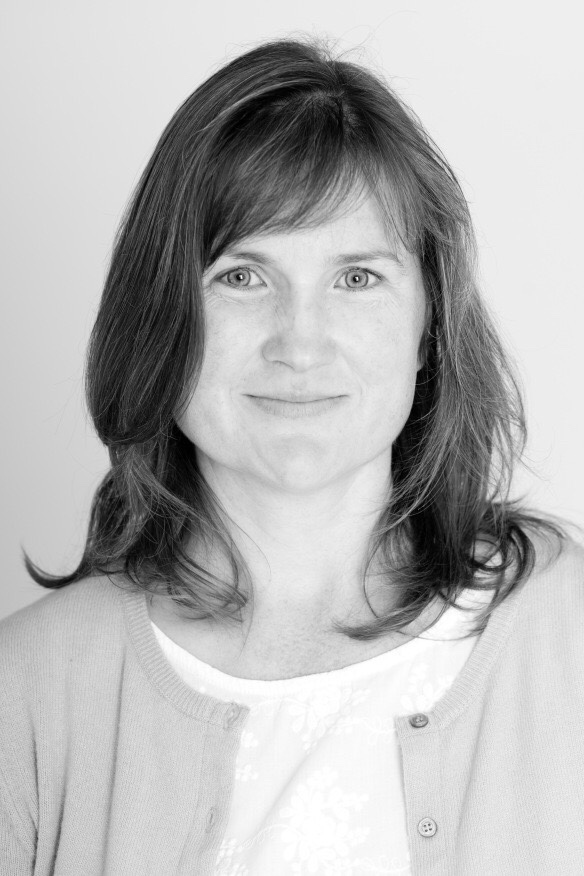
Emma’s writing has won awards including the Hall and Woodhouse DLF Writing Prize and the Society of Authors’ Tom-Gallon Trust Award. Her work has been published in literary journals in England, New Zealand and Australia.
Illustrator
Sarah Jane Humphrey,
Botanical Illustrator
Royal Horticultural Society (RHS) Gold Medal Award winner for the 2018 Botanical Art Show ‘Medicinal Plants and their Symbiosis with Pollinators’
Botanical Shorts – THE CONTRIBUTORS
Aulic Anamika
Aulic Anamika (she/they) is a post-migrant writer of colour with South Asian heritage. Apart from science fiction she writes poetry, literary fiction, creative nonfiction and stand-up tragedies. In 2022 she founded the Queer*ing Creative Writing Group (QCWG) in Berlin.
Aulic writes, ‘I had never been a plant person. Then the Covid-19 pandemic happened. It was hard not to notice the subtle movements of my houseplant. This story embodies the speculative imagination of post-migrant human-plant relations.’
Mark Bowers
Mark could be described as a smudge you can’t get rid of. Raised in England and preoccupied with Italy and Shakespeare, he is currently wrestling an obsession with the Botanical Gardens of Padua. Mark’s botanical stories are the product of grasping the nettle.
‘A Clear View’ illustrates how his interests in phytosociology, seventeenth-century herbals and random synchronicities are compromised by a fluttery butterfly mind.
Maria Donovan
Award-winning writer Maria Donovan lives in Dorset. Her debut novel, The Chicken Soup Murder, was a finalist for the Dundee International Book Prize and her flash fiction story, ‘Aftermath’, won the Bridport Prize.
The story ‘Narcissus’ was inspired by her experiences as an immigrant to the Netherlands. It seeks to share some of that inside knowledge with the reader, while maintaining a tight story about a person whose main focus is on her own reflection.
Read more about Maria on Maria Donovan.
Hildegard Dumper
Hildegard was born and lived in Malaysia and Singapore till she was 16. Currently living in the UK, Hildegard continues to visit the region regularly. Now retired, she is concentrating on her writing while also creating a wildlife-friendly garden.
Hildegard writes, ‘Family holidays were spent walking in the jungle. Discovering monkey cups was always a delight. In this short story I wanted to describe the jungle I had known and pay tribute to the people living there who I met.’
Rebecca Ferrier
Rebecca Ferrier is an award-winning writer based in Edinburgh and author of The Salt Bind (due for publication in 2025 by Renegade). Her recent prose has been published by Extra Teeth and New Gothic Review, while her poetry can be found in Poetry Ireland Review (139) and The Friday Poem. She is represented by Alex Cochran at C&W.
Rebecca writes, ‘‘Mulch’ was inspired by the invisibility of a woman’s needs in our contemporary society. Often, our use is placed in youth and beauty, with our wisdom and desires rarely considered once we reach a certain age.’
Instagram: Rebecca Ferrier
Elizabeth Gibson
Elizabeth writes stories, poems, and theatre. She has worked with Manchester Literature Festival, Manchester Poetry Library, Manchester Pride, the Portico Library, Oldham Coliseum, and Yorkshire Dance, and has been published in Confingo, Lighthouse, Magma, Popshot, Spelt, Strix, and Under the Radar.
Elizabeth writes, ‘I wanted to write a queer Manchester love story full of hope and happiness, including some of my favourite places where the city and nature come together, as well as my passions for hiking, music and art.’
Read more: Elizabeth Gibson
Thalia Henry
Thalia Henry lives in Auckland, in Aotearoa, New Zealand, but she grew up on the South Island Otago coast. She is the author of the novel Beneath Pale Water.
Thalia was inspired to write Nigella after looking at Nigella sativa on the window sill of her mother’s home in the coastal town of Karitane. The seedpods reminded her of little hearts.
Read more: Thalia Henry
Tamar Hodes
Tamar Hodes is a retired teacher for whom fiction writing is a passion. Her novels are Raffy’s Shapes, The Water and the Wine and Mixed, while some of her short stories are collected in The Watercress Wife and Other Stories.
Dog roses are dear to Tamar. They even featured on her wedding cake forty years ago! Her story explores the struggles between conformity and rebellion, the tame and the wild, and obedience and resistance. Tamar has questions but no answers.
Sarah Jane Humphrey
Sarah’s talent and distinctive style has made her a coveted illustrator within her field. She is an award-winning artist with four RHS medals from one of the most prestigious botanical art exhibitions in the world. In 2023 she accepted the gold medal awarded for her collection of seaweed paintings at the Saatchi Gallery in London. Much of her work is published in books and editorials. Sarah’s portfolio includes commissions for an array of clients including the Royal College of Physicians, BrewDog, The Eden Project, the Duchy of Cornwall, and Jo Malone.
Read more: Sarah Jane Humphrey.
Diana Powell
Diana Powell is the winner of several short story prizes. Her novella, The Sisters of Cynvael, won the Cinnamon Press Literature Award and will be published next year. Her novel, things found on the mountain (Seren Books) is out now.
Diana writes, ‘Hope is the thing with feathers’ … or the violet, the daisy, the rose – things found in Emily Dickinson’s garden that taught her resilience and inspired her work. And those poems, echoing my own love of nature, inspired me, too.’
Clare Reddaway
Clare writes short stories and plays. Recent highlights include being longlisted for the BBC National Short Story Awards and shortlisted for the Bridport Prize. Her novella Dancing in the Shallows will be published by Fairlight Books in 2024.
Clare writes, ‘My sister gave me an acorn vase one Christmas. I found the perfect specimen while tramping the lanes of Wales. Watching that acorn sprout and grow roots in front of my eyes was an engrossing, contemplative, and, it turns out, inspiring experience.’
Priyanka Sacheti
Priyanka Sacheti is a writer from Bangalore, India. Her writing has appeared in many literary journals such as Barren, Dust Mag Poetry, Common, Popshot, Lunchticket and various anthologies. She is working on a poetry collection and can be found on Twitter @priyankasacheti.
Priyanka writes, ‘The inspiration for this story is a beautiful colonial building in Bangalore, where I live. The structure’s interesting history, distinctive architecture and verdant garden made me imagine one of its former inhabitants as a ghost revisiting her beloved former home.’
Angela Sherlock
Stories from Angela’s collection about the Irish diaspora have been published in literary journals and anthologies, and other work has appeared in online magazines. The Garden of the Non-Completer Finisher comes from a collection upon which she is currently working, which takes its themes from the elements of the periodic table.
Angela writes, ‘My own garden was the inspiration for this story. The high walls send plants tumbling drunkenly out of the borders, chasing the sunlight. And I never quite finish tidying up.’
Read more: Angela Sherlock
Kate Swindlehurst
A graduate of the creative writing MA at Anglia Ruskin University, Kate Swindlehurst lives in Cambridge. She has written novels and short fiction. The Tango Effect, her memoir exploring the impact of Argentine tango on Parkinson’s disease, was published by Unbound in 2020.
Kate writes, ‘Whilst writer-in-residence at Cambridge University Botanic Garden, I learnt about the hidden properties of plants. This inspired the creation of Mercy, a nineteenth-century herbalist who relies on her expertise for survival.’
Read more: Kate Swindlehurst
Emma Timpany
Emma is a writer from the far south of Aotearoa, New Zealand, who loves flowers, plants, and short stories. Her books include Three Roads (Red Squirrel Press), Travelling in the Dark (Fairlight Books) and Cornish Short Stories (co-editor, The History Press).
Her story grew from a love of flowers, botany, and gardening, and her years as a florist and flower grower in New Zealand and England. The wild beauty of the Otago Peninsula and south-east Cornwall inspired the story’s setting.
Read more: Emma Timpany
Find out more about the contributors, news, and events at Website: Botanical Short Stories | X @BotanicalShorts Instagram @botanicalshortstories


6 responses to “Botanical Short Stories contemporary writing about plants and flowers Ed. By Emma Timpany Illustrations by Sarah Jane Humphrey @THP_local @BotanicalShorts @sarahgalerie #NovNov2025”
[…] Botanical Short Stories: Contemporary Writing about plants and flowers Ed. Emma Timpany, Illustrations by Sarah Jane Humphrey 202pp […]
LikeLike
This collection sounds wonderful! I’m adding this to my TBR! Thanks for sharing your thoughts on it as a whole, as well stories themselves. 🙂
LikeLiked by 1 person
Thank you, Karen, I thoroughly enjoyed it and hope you do too when you get to it. 🙂
LikeLiked by 1 person
[…] Botanical Short Stories contemporary writing about plants and flowers Ed. By Emma Timpany Illustrati… […]
LikeLike
Thank you so much for this wonderful review, Janet, full of thoughtful and insightful comments. I’m thrilled at you enjoyed reading Botanical Short Stories,
Warmest wishes,
Emma
LikeLiked by 1 person
Thank you, Emma, I’m so pleased that you’re happy with my thoughts on Botanical Short Stories. Yes, I certainly did enjoy reading it such a wonderful set of stories each having its own unique perspective of the botanical setting it’s a terrific anthology!
Best wishes, Janet.
LikeLiked by 1 person