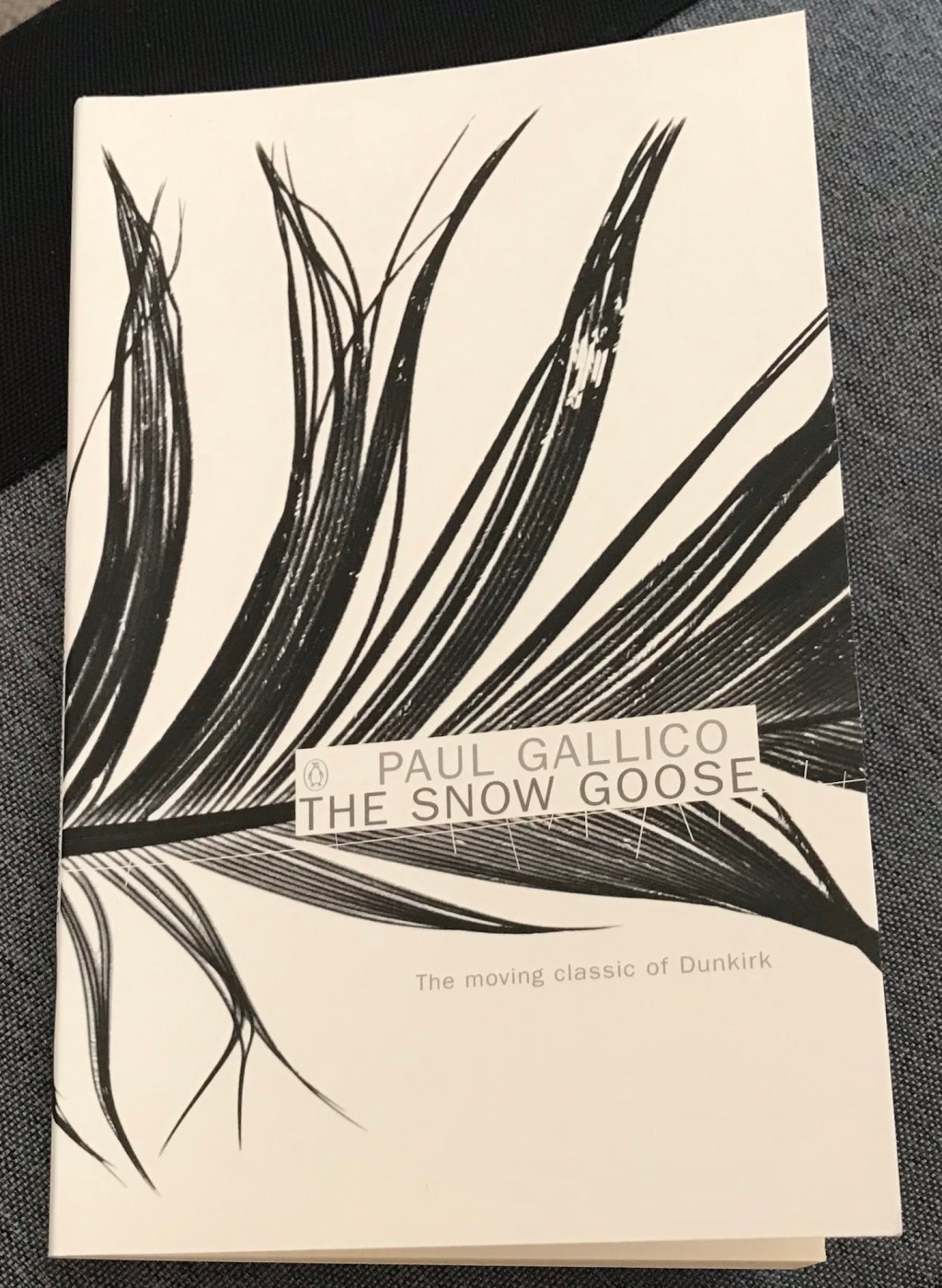
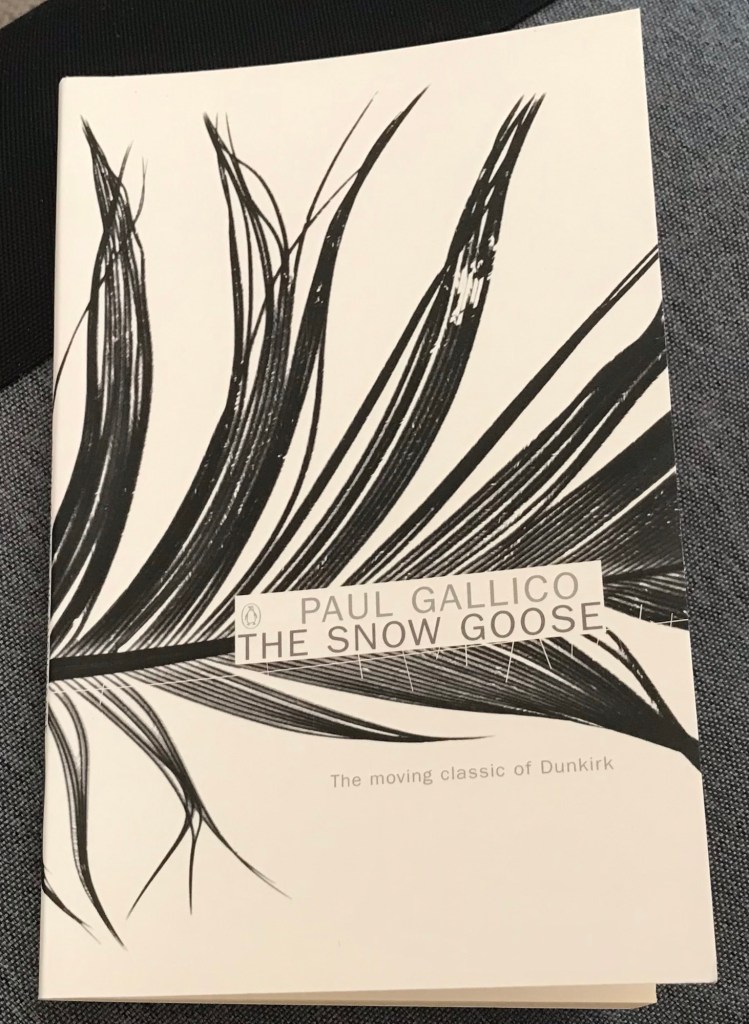
The moving classic of Dunkirk
Book blurb
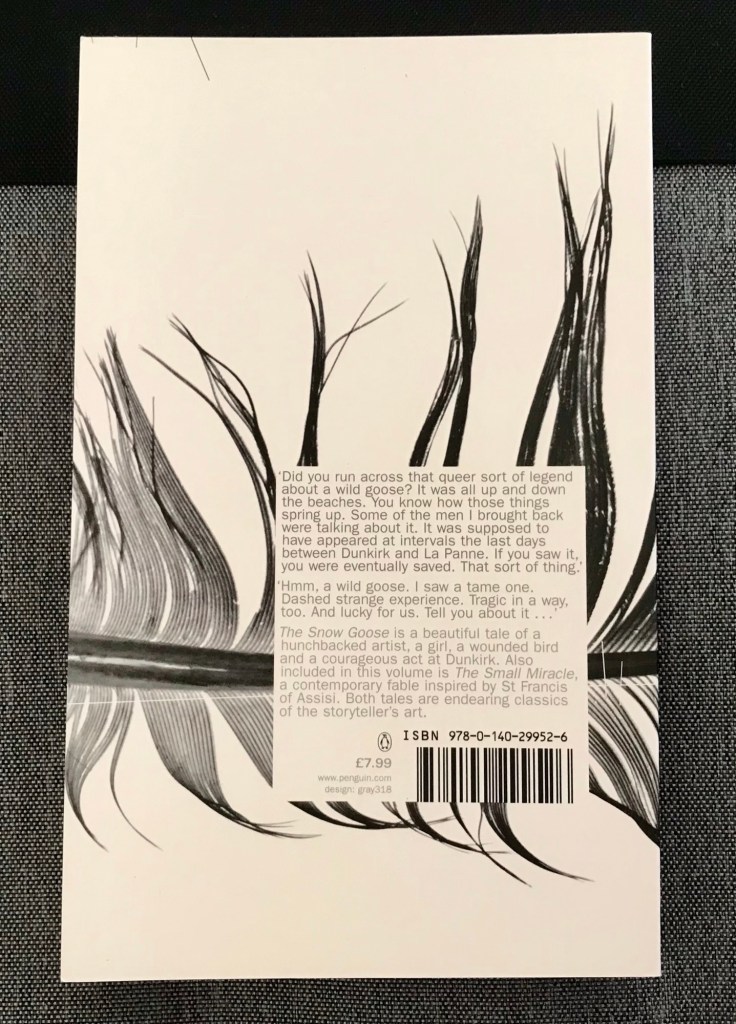
Classic storytelling from a bestselling author. Gallico’s most famous story, THE SNOW GOOSE, is set in the wild, desolate Essex marshes and is an intense and moving tale about the relationship between a hunchback and a young girl.
Note
The book also contains THE SMALL MIRACLE a contemporary fable about a young boy’s love for his dangerously ill donkey. I may post about this story on another occasion.
My thoughts
This is a short story coming in at 39 pages and in this edition there are some lovely drawings by Anne Linton.
The book is set in the marshlands of the Essex coast ‘one of the last of the wild places of England’ and the author describes the setting beautifully telling us that it had been left to itself for many years when ‘a lonely man’ came to live there. Philip Rhayader (often spelled Ryder or Riyader in various adaptations) comes to live in the lighthouse at the mouth of the river Aelder. It is thought that Paul Gallico based it on the River Nene in South Lincolnshire and the lighthouse was inspired by the East Bank Lighthouse, which was the pre-war home of Gallico’s close friend, the famous wildlife artist and conservationist Sir Peter Scott.
At 27 Philip had travelled a lot and felt it was time to settle away from the hurt of the world. He was badly disfigured and the reactions to this was something he wanted to put behind him. So, Philip lives quietly on the Great Marsh painting, sailing his boat, occasionally making trips to Chelmsbury (an actual place close to the fictitious lighthouse) for provisions and caring for injured birds.
One day a girl, Fritha, comes to the lighthouse with an injured snow goose. As the snow goose heals Fritha overcomes her initial fear of Philip and slowly a bond builds between them. When the snow goose flies north Fritha stops visiting but as the bird returns each year so does Fritha. Ten years sees a deepening of feelings and trust between them.
Then the outbreak of World War II and the moment that arrives in 1940 of the infamous evacuation of Dunkirk. Small boats called upon to cross the English Channel to help evacuate those soldiers stranded on the beaches. Philip takes his boat across, the snow goose follows and his actions become legend amongst the soldiers.
Fritha waiting for Philip to return begins to realise that she loves him but that he is lost when the snow goose returns alone.
As ever I love how a short story is able to convey so much in so few pages. The Snow Goose is no exception and does so in the most beautiful way. A story of hurt, healing, courage, love and loss it is a poignant tale that is simply told, evocative as it makes you feel you are there in the wilderness of the marsh, there seeing the bond, the love between two lonely souls who ultimately and in their own way sacrifice so much. Then we are at Dunkirk as boats and men fight to save those who are so desperately trying to escape from the bombing and bullets of the enemy in order to retreat, regain strength and return to fight another day.
The Snow Goose is a wonderful story. It is not the first time I have read it but it was a long time ago it will not be as long before I return to it again.
Book: Purchased
#20BOS26

You can read all about the #20BOS challenge on Annabel’s blog at AnnaBookBel. Annabel has taken sole charge of this challenge in 2026 having been co-host with Emma Words and Peace in 2025 after taking over the challenge from Cathy @ 746books.


Information
Published: Penguin | 22 Feb 2001 | 80 pp | ISBN-10 : 9780140299526
Buy: Amazon | Bookshop.org (affiliate link) | Hive | Your local library | Your local library
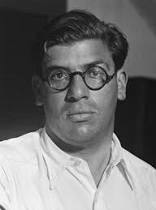
Author: Gallico was born as Paul William Gallico on July 26, 1897, in New York City, New York, United States. His death occurred on July 15, 1976, at the age of 78. His father was a concert pianist, music teacher, and composer from Italy named Paolo Gallico. His mother was an Austrian citizen named Hortense Erlich. Gallico’s parents had emigrated to New York City in 1895. Author Gallico completed his graduation from the Columbia University in the year 1919. He gained attention for the first time during the 1920s as a sports columnist, sports editor, and sportswriter, writing columns about sports activities in the New York Daily News. His career was launched during an interview with a boxer named Jack Dempsey. Gallico asked Jack to spar with him then wrote about how he felt after the heavyweight champion knocked him out. Gallico followed this up with other incidents such as playing golf with Bobby Jones and catching ball with Dizzy Dean. In the next few years, Gallico became a highly paid sportswriter in the US. He went on to lay the foundation of an amateur boxing contest called Golden Gloves. One of author Gallico’s books, Lou Gehrig : Pride of the Yankees, was developed into a Hollywood movie in 1942, which starred Teresa Wright and Gary Cooper in the lead roles. It brought him a nomination for an Academy Award in best writing, original story.
When Gallico resigned from the Daily News after deciding to become a full time writer of fiction novels, he moved from New York to Salcombe a small village in Devonshire, England.
During the late 1930s, author Gallico decided to give up sports writing to write fiction. The first story he wrote was in the form of an essay and was called Farewell to Sport. It was based on his change of career path. In the next few years, Gallico became a popular short story writer for magazines. A number of his stories appeared in the Saturday Evening Post. Gallico’s novella, The Snow Goose, and several of his other works are extended versions of these magazine stories.
Gallico had once made a confession to the New York Magazine that he was a rotten novelist and not literary at all. He simply liked to tell stories. In 1939, another successful book was released, Adventures of the Hiram Holliday. This book is particularly well known for its TV adaptation.
Paul Gallico wrote children’s books, novels, short stories and sports stories. A number of his books have been adapted in the form of motion pictures. He was particularly well known for writing the Mrs.’Arris series but is perhaps best remembered for writing The Snow Goose. It is this novel that has been Gallico’s main, perhaps only, critical success. A second novel The Poseidon Adventure, also brought him recognition yet is better remembered through its 1972 movie adaptation.
In 1955, author Gallico had taken an automobile tour of America sponsored by the Readers Digest in which he had traveled around 10,000 miles. Gallico enjoyed the tour with a great excitement and enthusiasm. He resided in numerous places including Monaco, Lichtenstein and Mexico. His last years of were spent in Antibes, France, where he died and was cremated.
Books
Publication Order of Mrs. ‘Arris Books
Paul Gallico wrote the Mrs. ‘Arris series. This series is comprised of a total of 4 books, released between the years 1958 and 1974. All the books of this series depict the lead character in the form of a woman named Mrs. Harris, who lives in London. She earns her livelihood by cleaning the houses of rich people at home and abroad. The first novel of this series is entitled ‘Mrs. ‘Arris Goes To Paris’. It was released by the International Polygonics in the year 1989, after its initial release in 1958.
Mrs. ‘Arris Goes to Paris (1958) | Flowers For Mrs. Harris (1958) | Mrs. ‘Arris Goes to New York (1960) | Mrs. ‘Arris Goes To Parliament / Mrs. Harris MP (1965) | Mrs. Harris Goes To Moscow (1974)
Publication Order of Hiram Holliday Books
The Adventures of Hiram Holliday (1939) | The Secret Front (2020)
Publication Order of Standalone Novels
The Snow Goose (1941) | The Lonely (1944) | Jennie / The Abandoned (1950) | The Small Miracle (1951) | Snowflake (1952) | Trial by Terror (1952) | The Foolish Immortals (1953) | Love of Seven Dolls (1954) | Ludmila (1954) | Thomasina / The Three Lives of Thomasina (1957) | Too Many Ghosts (1959) | Scruffy (1962) | Coronation (1962) | The Day the Guinea-Pig Talked (1963) | Love, Let Me Not Hunger (1963) | The Adventures of Jean-Pierre (1964) | The Hand of Mary Constable (1964) | The Day Jean-Pierre Was Pignapped (1964) | The Day Jean-Pierre Joined The Circus (1965) | The Man Who Was Magic (1966) | The Story of Silent Night (1967) | Manxmouse (1968) | The Poseidon Adventure (1969) | Matilda (1970) | The Zoo Gang (1971) | Miracle in the Wilderness (1975) | The Boy Who Invented the Bubble Gun (1975) | Beyond the Poseidon Adventure (1978) | The House That Wouldn’t Go Away (1979)
Publication Order of Short Story Collections
Honorable Cat (1972) | The Snow Goose and Other Stories (1985) | Love Is A Gimmick And Other Short Stories (1987) | The Best of Paul Gallico (1988)
Publication Order of Non-Fiction Books
The Hurricane Story (1959) | The Silent Miaow (1964) | Confessions of a story-teller (1966) | Farewell to Sport (1970) | Lou Gehrig: Pride of the Yankees (2015)
Publication Order of New York Review Children’s Collection Books
Jennie / The Abandoned (1950) | Thomasina The Cat Who Thought She was a God (1950)

 Janet - LoveBooks, ReadBooks: A readers musings, thoughts and reviews
4 responses to “The Snow Goose by Paul Gallico @PenguinUK #20BOS26”
[…] 05. The Snow Goose by Paul Gallico** | 1940/1 | pp64 […]
LikeLike
That’s how I discovered Gallico! I enjoyed this tory a lot. Since then, I have been blown away by Thomasina:
https://wordsandpeace.com/2026/06/29/book-review-thomasina/
Definitely planning to read more by him
LikeLiked by 2 people
Thanks for the link, I’ve not read Thomasina so will take a look.
LikeLiked by 1 person
[…] The Snow Goose by Paul Gallico** | 1940/1 | […]
LikeLike