The novella established Larsen as one of the most important female authors in American literature and is considered a literary masterpiece of the Harlem Renaissance era.
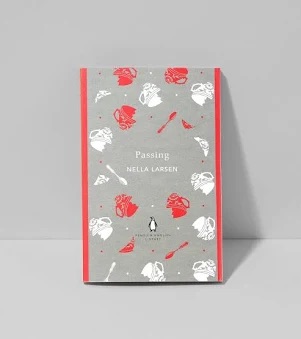
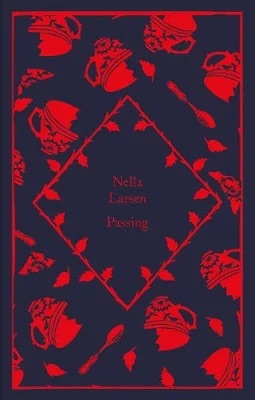
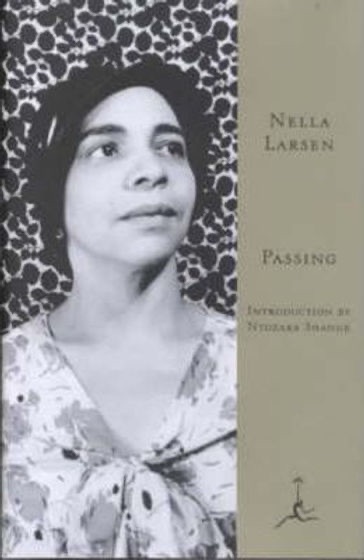
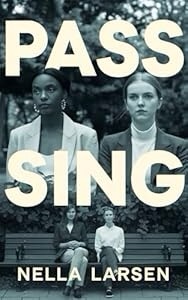
Book blurb
Discover the Compelling Story of Passing
Nella Larsen’s Passing is a groundbreaking exploration of race, identity, and societal expectations in 1920s America. This powerful novel examines the lives of two women navigating the complexities of racial boundaries and personal choices in a society deeply divided by prejudice.
A Story of Friendship and Secrets
The novel follows Irene Redfield and Clare Kendry, two childhood friends who reconnect as adults. While both women are of mixed racial heritage, their life choices diverge dramatically—Clare “”passes”” as white to gain access to a privileged world, while Irene embraces her identity within the Black community. As their lives intertwine, tensions rise, exposing the risks and consequences of Clare’s decision and challenging Irene’s carefully constructed world.
A Literary Masterpiece
Passing is a richly layered work that continues to resonate with readers for its poignant exploration of identity and the human condition. Nella Larsen’s eloquent prose and sharp insight make this novel a cornerstone of 20th-century literature, offering an essential perspective on race and gender in America.
My thoughts
I’ve been considering this novella for a while so it was good to get to it.
Two women – Irene and Clare – were friends at school until Clare moves to live with relatives after the death of her parent. For a while she had continued to visit her school friend but soon she visited no more. Some of the girls at school saw her and rumours went around, Irene’s father called on Clare’s relatives to make sure all was well. Clare wondered but time passed and her life went on. Eventually she married a doctor and they lived a comfortable life in Harlem.
Years later when Irene is back in Chicago visiting her family she is out shopping on a particularly hot day, feeling overcome she goes to a hotel for tea. Who should she meet there? Yes, her old school friend Clare!
Clare and Irene are both mixed race but have pale skin. Irene though she has contentedly married a man of colour and raised a family with him occasionally doesn’t correct others who take her for a white woman. Like going to this hotel and taking tea there. Clare on the other hand passes as a white woman and is married to a white man.
As their lives become more entwined Clare seems to want to connect with her black culture and community. Taking more risks in doing so. Yet it is a chance meeting that Irene has with Clare’s husband and a realisation about her own husband that sets in motion a devastating chain of events.
Wrought with tension this novella raises all sorts of questions and issues about race, a persons choice to choose their own path, how letting others believe something that is not true causes appalling consequences and yet telling the truth can be just as damaging. It also raises questions about friendships and trust; of relationships whether based on the truth or not can equally be damaging. It is a beautifully taut and well written story that even has an element of mystery about the ending which fed my love of crime fiction if only for a brief moment and in a different sense.
The character of Gertrude was an interesting inclusion married to a white man who had always known his wife was a negro (the term used in the book for African American) and married, if you will, despite it and rather for love. Whilst Irene married for love within her own community there was a strain between them with regard to living in the USA and how to handle racism with their son. Clare had chosen to pass as white but although it seems to have been her choice and ultimately marrying a white man without him knowing she was black and remaining married to him in that sense it was nevertheless at first it was as a result of what had happened to her years before when she had left the school where she and Irene were friends.
Indeed Clare’s character is flawed not for being someone who passes but for her inability to care about the consequences of her actions when she’s fully aware of what those actions will mean for others.
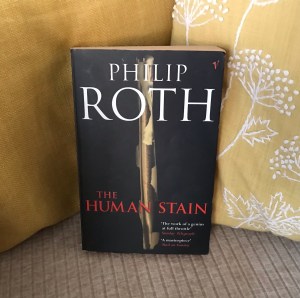
I read Philip Roth’s The Human Stain some years ago and I felt the same impact as when reading Passing when it came out albeit for only a heartbeat in this story. It was shocking and incredibly sad to me that someone would choose to live as something different than who they are. All those years ago perhaps I was a little naive but it brought to me a deep sense of sadness about this human race that we can consider someone less than because of their colour, their race. To which we must nowadays also add gender and sexual orientation. When reading Passing the shock was that, even though this was set in the 1920s, we still haven’t come much farther in our acceptance of each other today which made me think, feel, understand that when someone passes as something else it can be a brave or a flawed choice but certainly a choice that I have little right to judge.
Book: purchased
#NovNov2025
#NovNov2025 is co-hosted by Cathy @Cathy746books and Rebecca @bookishbeck to join just post a joining in blogpost and add the link via either of the hosts Link-up post (click on links above).
My post will have each link of my reads added and can be found here: My Novella November reads
Information
Published: Grapvine India (Modern Library Torchbearers Series) | 25 Mar. 2022 (Originally published 1929) | 104 pp
Buy: Amazon | Hive | Bookshop.org (affiliate link) | Your local bookshop | Your local library
Author
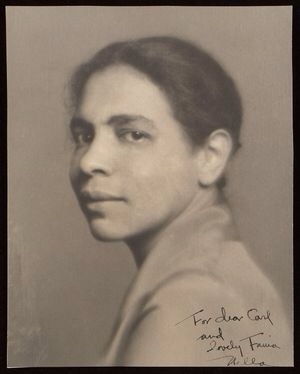
Nella Larsen, photographed in 1927 by James L. Allen. Larsen inscribed the photo to Carl Van Vechten and Fania Marinoff.
Nella Larsen was an influential African American author known for her significant contributions to literature during the Harlem Renaissance. Born to a Danish mother and a Danish West Indian father, Larsen’s early life was shaped by her unique racial identity, as she grew up in a predominantly white family after her father’s early death. She pursued her education at Fisk University before studying in Denmark and later becoming a nurse. In 1928, she published her acclaimed novel “Quicksand,” which explores themes of racial identity and personal fulfillment through the story of Helga Crane, a woman of mixed heritage. Her second novel, “Passing,” released in 1929, further established her literary talent and earned her a Guggenheim Fellowship, making her the first black woman to receive this honor. Despite her promising career, Larsen faced personal challenges that led to her withdrawal from the literary scene by the late 1930s. She returned to nursing after her husband’s death and continued to work in that field until her passing in 1964. Larsen’s works continue to resonate for their exploration of the complexities of race and identity in America.
Published in: 2023 By: Lewis, Leslie W. (EBESCO)
EBESCO.com | Blackpast | Oxford Bibliographies | Britannica | Herstory: Nella Larsen
Books
Quicksand (1928)| Passing (1929)| Short stories, “The Wrong Man,” “Freedom,” and “Sanctuary.” | 1931 Knopf rejected the Guggenheim manuscript


10 responses to “Passing by Nella Larson #NovNov2025”
[…] Passing by Nella Larsen […]
LikeLike
[…] Passing by Nella Larsen […]
LikeLike
I read this book earlier this year and thought it was well done and thought-provoking. Then I read the Personal Librarian which is about JP Morgan’s personal librarian who also lived passing as white. Interesting, both.
My last review of this month’s challenge: https://headfullofbooks.blogspot.com/2025/11/reviews-for-three-novellas-we-animals.html
LikeLiked by 1 person
That’s interesting I shall take a look.
LikeLike
Such a powerful read, isn’t it? That ending!!!
LikeLiked by 1 person
It is a powerful read and yes!
LikeLiked by 1 person
Thanks for the good review of a really interesting book and of course the Roth makes for a perfect companion read. I assume you mean sex when you use the g word in this sentence: “All those years ago perhaps I was a little naive but it brought to me a deep sense of sadness about this human race that we can consider someone less than because of their colour, their race. To which we must nowadays also add gender and sexual orientation.”
LikeLiked by 1 person
That’s kind of you to say and yes it is an interesting book.
LikeLike
I keep meaning to put this on my pile for Novellas in November! It sounds so good.
LikeLiked by 1 person
I thought it was really good and well worth reading.
LikeLike