The moving story of the life and work of novelist Virginia Woolf, revealed through her own letters to those closest to her.
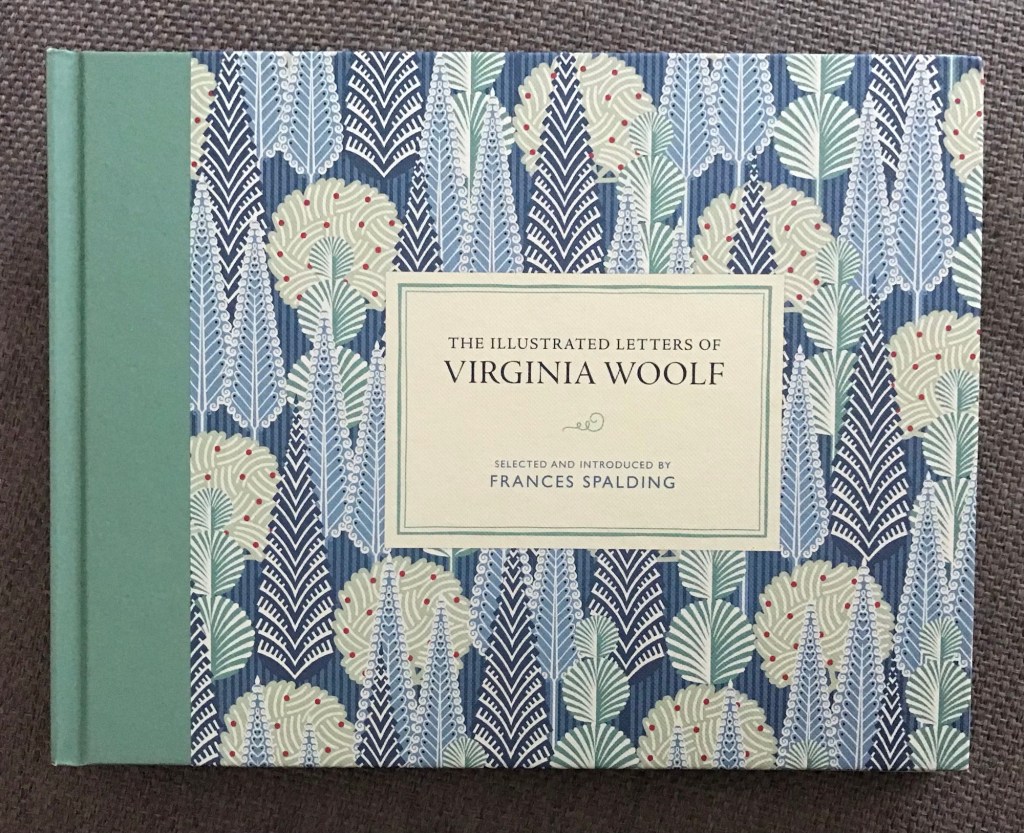
Book blurb
Virginia Woolf is considered by many to be one of the greatest British writers and one of the foremost modernists of the twentieth century. As well as writing her novels, Woolf was a tireless correspondent, penning as many as six letters a day.
This collection of Virginia Woolf’s letters offers a fascinating insight into her life, illuminating the complex personality of the novelist herself. The letters range from witty and irreverent to melancholy and introspective, with intimations of the bouts of mental illness that were to lead her to take her own life. She was a writer of genius; and through her correspondence we come close to one of the most brilliant and high-spirited minds of the twentieth century. ‘A true letter’, she insisted, ‘should be like a film of wax pressed close to the graving of the mind’.
The book contains background information on Virginia Woolf’s life along with real samples of her handwriting. There are also biographical notes on the main recipients of the letters, together with a family tree for keeping track of names.
The letters are beautifully illustrated throughout with photographs, paintings and sketches of the people and places with which Virginia Woolf was most closely connected – many by members of the Bloomsbury Group, such as Woolf’s sister Vanessa Bell, Roger Fry and Duncan Grant.
My thoughts
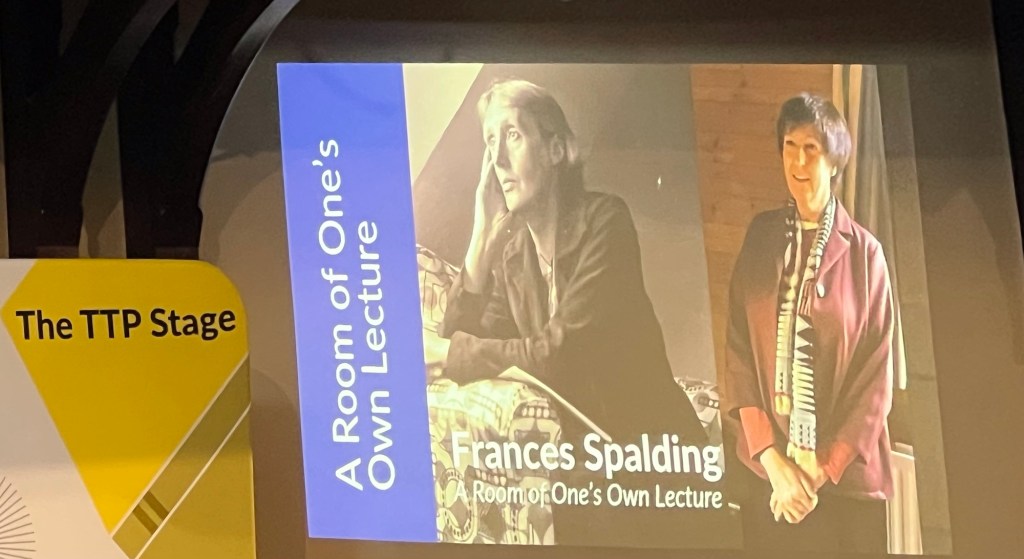
I went to see ‘A Room of One’s Own’ in April this year it was an interesting and enjoyable event. In the events ‘bookshop’ afterward purchased a copy of this book and the author signed it.
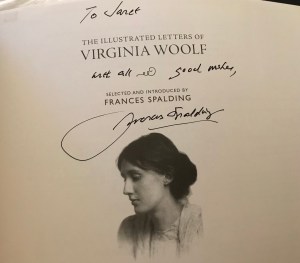
It’s a beautiful item the cover is lovely and the inside is filled, as is expected, with letters written by Woolf, photographs, paintings, sketches, background information on Virginia Woolf’s life along with real samples of her handwriting, biographical notes on the main recipients of the letters and a family tree for keeping track of names. It is practically a piece of art in itself.
I read The Illustrated Letters of Virginia Woolf as part of my 20 books of summer challenge this year. Strictly speaking I think that means I shouldn’t count it as part of the 1925 Club reads. It’s not, of course, by Virginia Woolf nor was it printed in 1925 and whilst my post is just outside the 1925 club dates, it is very late for posting on my 20 books of summer challenge all in all perhaps I shouldn’t count it as part of the 1925 Club still I am!
How? You may ask. Well this book is broken down into a chronological order under several headings. One of the headings is The Hogarth Press within which falls the year 1925. In particular there are letters written by Woolf dated in 1925.
Ah! I hear you say, tell me more.
Virginia Woolf was great friends with Jacques Raverat and his wife, Gwen. When Jacques and Gwen moved to Vence, in southern France, for his health their friendship blossomed through their letter writing.
Jacques Pierre Paul Raverat was a painter born in Paris, France, in 1885. Raverat started at Bedales School in Steep, Hampshire in 1898. From Bedales, he went up to Jesus College, Cambridge where he met Gwen Darwin whom he later married. In 1914 he was diagnosed with MS and after almost a decade of pain and illness he died in 1925.
Gwen Raverat was born in Cambridge in 1885 she was a graphic artist, theatre designer, painter, and writer, the daughter of Sir George Darwin, professor of astronomy, and granddaughter of Charles Darwin.
Gwendolen Raverat
ArtUK.org
1885–1957
British, English
British graphic artist, theatre designer, painter, and writer, born in Cambridge, the daughter of Sir George Darwin, professor of astronomy, and granddaughter of Charles Darwin. She studied at the *Slade School, 1908–11, but was mainly self-taught in wood engraving, which was her primary activity. In 1911 she married Jacques Raverat, a French former student of mathematics at Cambridge who had taken up painting and studied with her at the Slade. They spent much of their time in France until his death in 1925; thereafter she lived in London and Cambridge. She was a founder of the Society of Wood Engravers in 1920 and was best known for her book illustrations, notably of collections of poems by her cousin Frances Cornford and for the Cambridge Book of Poetry for Children, selected by Kenneth Grahame (1932).
Text source: A Dictionary of Modern and Contemporary Art (Oxford University Press)
In The Illustrated Letters of Virginia Woolf Frances Spalding notes on page 87 that Jacques Raverat’s health was declining and because of this he began his autobiography.
Virginia wrote to him on 29th November 1924 expressing her concern and distress over his worsening health which had him in severe pain. She wanted him to let her translate his autobiography and have it published by the Hogarth Press. A further letter on Boxing Day, 26th December 1924 was more chatty with regard to what was happening with mutual friends Maynard and Lydia, Roger Fry, that Angus Davidson was staying as he had become a partner in the Press and of Vita Sackville-West whose writing Virginia felt ‘she does with complete competency’ but that ‘her real claim to consideration, is, if I may be so coarse, her legs. Oh they are exquisite…’.
Really you have done me good. This is the first time I have cantered out on paper this fortnight. I find a great pleasure in walking all the doves in their dovecots – in stirring my words again.
Virginia Woolf (letter to Jacques Raverat 6th February 1925)
We then come to the letters in 1925. The first is written on 6th February apologising for not having sent Jacques a copy of Mrs Dalloway and saying it would be sent the next day. Virginia Woolf had and still was in bed recovering from influenza, she comments that she is always floored by it and cannot conceive how Jacques has lived with his illness for so long and still able to carry on with a clear mind. She also talks – because as with all good letters they become more conversation, something more intimate with an expectation of understanding and acceptance if not agreement – in length of Karen’s (Adrian Stephens’ wife) party and of Clive Bell’s kindness during her illness, he had visited and sent grapes, despite her ‘never doing anything but bite his nose off when I see him’ and she had been ‘so rash’ in admonishing him for over praising his paramour Mary Hutchinson. She asks after his autobiography and assures him she will print it.
Your and Jacques’ letter came yesterday, and I go about thinking of you both in starts, and almost constantly underneath everything, and I don’t know what to say. The thing that comes over and over is the strange wish I have to go on telling Jacques things.
Virginia Woolf (letter to Gwen Raverat, 11 March 1925)
Jacques Raverat had died on 7 March 1925. He had received the Mrs Dalloway proofs a few days before and had dictated a letter to Virginia Woolf about it. Virginia wrote to Gwen both to express her sadness, her admiration, her despair and that she would give anything to make Gwen enjoy life.
Then towards the end of the letter she says how moved and relieved she was regarding their reading and liking Mrs Dalloway, thinking she must sound vain regarding this and concludes by saying ’There is little use in writing this. One feels ignorant… …one keeps thinking of you… and of that adorable man, whom I loved.’
…the impression it made on you would mean more to me than what other people could say of it.
Virginia Woolf (letter to Gwen Raverat 8th April 1925)
In April Virginia Woolf writes to Gwen Raverat after having been away to France, understanding why she and Jacques had moved there, about Paris and wanting Gwen to return to London offering her help in finding a house. She talks of still thinking of Jacques being alive, of wanting to understand her own feelings and not ‘go dreaming my time away.’ How she ‘cannot conceive such an experience’ as that which Gwen had gone through. She had been reading Jacques letter on Mrs Dalloway again and saying that she would like to know, in time, what it was that Gwen liked about it or anything about it. Asking partly out of (an author’s) vanity, partly out of interest in an author’s own work which is not entirely vanity and partly because her (their) opinion mattered to her.
Gwen Raverat was soon to return to England living in London and Cambridge.
This is a beautiful book and one that provides a different perspective on Virginia Woolf a personal insight on her life. It is fascinating and I loved and enjoyed it. Yet it can feel intrusive these letters were, after all, meant for the recipient not you or I. Still, as with all great writers, artists etc it is a desire to know more about them, their work and gain some understanding of the how, the why of what they did and who they were that makes us search for it in this way. And, in some ways, I don’t think Virginia Woolf would mind this intrusion, though she might be surprised at how much she is admired all these years later, because being someone who wanted to be admired – for her craft – and knowing how other admired people/artists in the public eye during and before her own lifetime are sought after, she might have expected it. Moreover, her lifestyle I believe has been a positive influence for many on that personal level giving them someone who they can look to, admire and who allows them to feel accepted because of the way she has had and is accepting of different types of relationships. Whilst this might, does come through in her books it is something that is made so relevant and ordinary in her letters.
Book: purchased
The #1925Club
Kaggsy’s Bookish Ramblings
#1925Club upload your posts here
This page is for our 10th Anniversary Club Reading week where we enjoy books from the year 1925! Please join us in reading, exploring, commenting on and recommending any exciting books you’ve discovered! I’ll collect here links to everyone’s posts, and if I miss yours please leave a comment so that I can add it in! Happy reading!
KAGGSY’S BOOKISH RAMBLINGS
Or on Simon’s blog
Welcome to the 1925 Club!
All week, Karen and I are asking people to read and review books published in 1925 – whatever format or language. Together, we’ll build up a picture of the year in literature. And, believe it or not, it’s ten years since the club years kicked off. We’ll be celebrating those ten years on Thursday with a special look back, and we’d love you to join in that too.
Post links to your reviews in the comments (and if you don’t have a blog/insta/etc then feel free to write your review in the comments.)SIMON FROM STUCK IN A BOOK
I read The Illustrated Letters of Virginia Woolf as part of my 20 books of summer challenge.
My list of books being read for this challenge.
20 books of summer has new hosts Emma of Words and Peace and you can read all about it on Annabel’s blog including all the rules and sign up. It’s a challenge I’ve always enjoyed and am sure I’ll continue to do so.
The challenge takes place between 1 June and 31 August 2025
Information
Published: Batsford Books | ISBN:9781849949637 | 03 July 2025 | 160 pp
Buy: Batsford Books | Amazon | Hive | Bookshop.org (affiliate link) | Your local library | Your local bookshop
Author
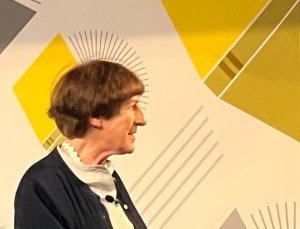
Frances Spalding is an art historian, critic and biographer. She read art history at the University of Nottingham and began writing pieces for the TLS, The Burlington Magazine and art journals while still a post-graduate. She has a specialist interest in twentieth-century British art and first established her reputation with Roger Fry: Art and Life. She went on to write lives of the artists Vanessa Bell, John Minton, Duncan Grant, Gwen Raverat and John and Myfanwy Piper, as well as a biography of the poet Stevie Smith. Her survey history, British Art since 1900, in the Thames & Hudson World of Art series, led on to a commission from the Tate to write a centennial history of this national institution. Between 2000 and 2015, she taught at Newcastle University, becoming Professor of Art History. In 2014 she was invited by the National Portrait Gallery to curate the exhibition Virginia Woolf: Art, Life and Vision, and to write the accompanying book. She acted as Editor of The Burlington Magazine, 2015–16, and is now is a Fellow of Clare Hall, Cambridge. She is also a Fellow of the Royal Society of Literature, an Honorary Fellow of the Royal College of Art and in 2005 was made a Companion of the British Empire for Services to Literature. Her books include British Art Since 1900 and biographies of the painters Roger Fry and Vanessa Bell.
JACQUES RAVERAY (1885 – 1925)
GWEN RAVERAT (1885-1957)
Wood Engravings 1909-1928
Cambridge Literature Festival
Mrs Dalloway 100 | Megan Hunter Alex Clark & Tom Crewe
Sat 22 Nov 2025 | 10:00am – 11:00am
This year marks the centenary of the publication of Virginia Woolf’s ground breaking novel Mrs. Dalloway. Taking place during one day, Clarissa Dalloway prepares her house for a party and reflects on and re-examines the choices she has made over the course of her life. Virginia Woolf started writing Mrs Dalloway in 1922 as a short story. Its publication in 1925 was met with modest commercial success but the novel went on to become one of the most vital works of literature of the last century. Join our panel of experts as they discuss and celebrate what is considered to be Woolf’s greatest novel.
Chaired by Erica Wagner
Venue: Old Divinity School
Duration: 1 hour
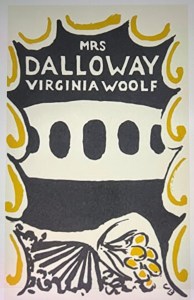
Virginia Woolf
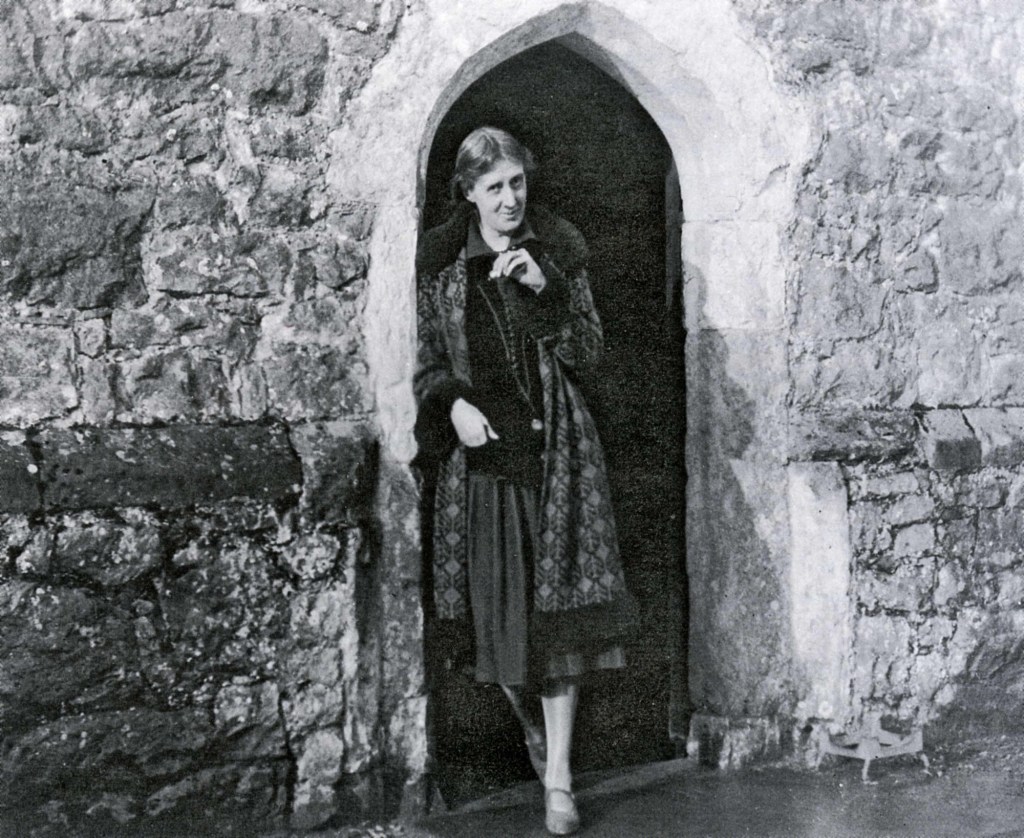
THE AUTHOR VIRGINIA WOOLF, A DRIVING FORCE BEHIND THE BLOOMSBURY GROUP, AT KNOLE HOUSE, KENT, IN 1928. PHOTOGRAPH: PICTORIAL PRESS LTD/ALAMY
Virginia Woolf (1882–1941) was a Modernist writer, widely considered to be one of the most important of the twentieth century.
She and her husband Leonard bought a hand-printing press in 1917, and they set up Hogarth Press in their house in Richmond, which published much of Virginia’s work, as well as those of friends and fellow luminaries. She was a member of the Bloomsbury Set – an artistic, philosophic and literary group which included John Maynard Keynes, E.M. Forster and Lytton Strachey.
Today she is best remembered for her novels – in particular To the Lighthouse and Mrs Dalloway – and her essay A Room of One’s Own.
A short biography (VWSGB)
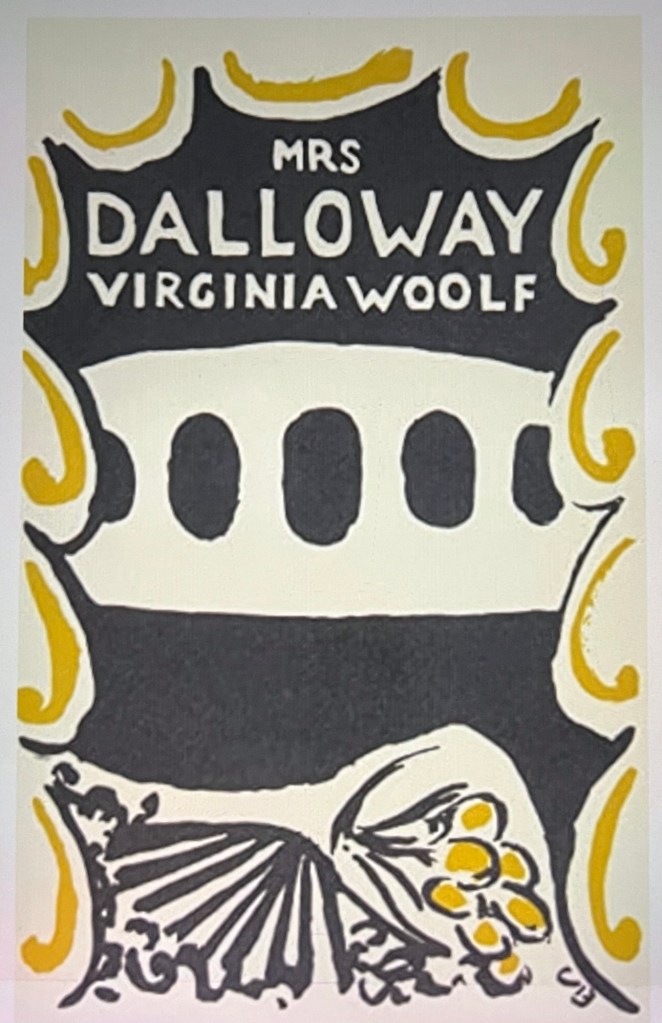
Major Works
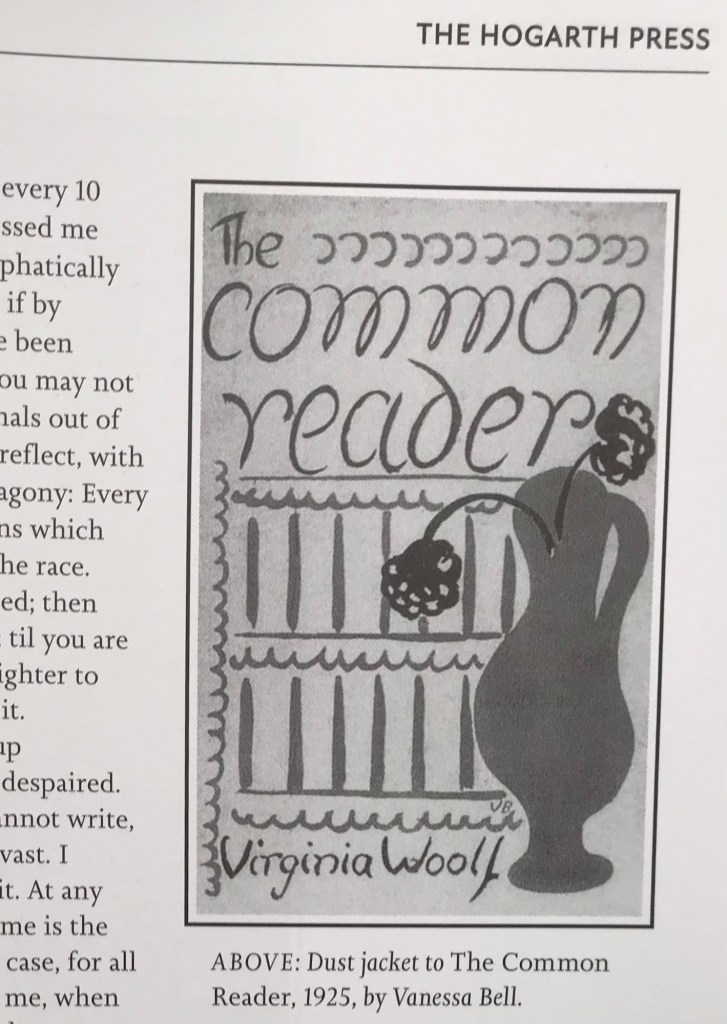
THE VOYAGE OUT (1915) | THE MARK ON THE WALL (1917) | KEW GARDENS (1919) | NIGHT AND DAY (1919) | MONDAY OR TUESDAY (1921) | JACOB’S ROOM (1922) | MR. BENNETT AND MRS. BROWN (1924) | THE COMMON READER (1925) | MRS. DALLOWAY (1925) | TO THE LIGHTHOUSE (1927) | ORLANDO: A BIOGRAPHY (1928) | A ROOM OF ONE’S OWN (1929) | THE WAVES (1931) | THE COMMON READER: SECOND SERIES (1932) | FLUSH: A BIOGRAPHY (1933) | THE YEARS (1937) | THREE GUINEAS (1938)| ROGER FRY: A BIOGRAPHY (1940) | BETWEEN THE ACTS (1941)
A List of the Principal Works of Virginia Woolf
For more information on Virginia Woolf and her writing visit the Virginia Woolf Society of Great Britain


3 responses to “The Illustrated Letters of Virginia Woolf selected and introduced by Frances Spalding #20BooksOfSummer25 #1925Club”
What a fascinating post! I read all of Woolf’s letters about 40 years ago, so I had missed that this illustrated book had come out. Will definitely check it out!
LikeLiked by 1 person
Thank you for your kind words. I think there may have been a couple of iterations (it may have at one time been produced for the National Trust) I came across it in the bookshop that was set up as part of the event I attended in Cambridge. It’s a beautiful book part of a series (includes Austen, the Bröntes and Wilde) from the publisher Batsford – who seem to have sold out but it can still be found via Hive, Bookshop.org and Amazon.
LikeLiked by 1 person
[…] 17. The Illustrated Letters of Virginia Woolf by Frances Spalding (Selected and introduced by) […]
LikeLike