‘Sheer magic.’ Eileen Atkins*
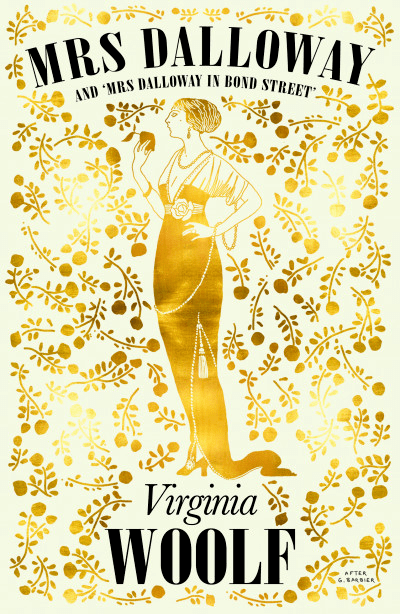
Book blurb
First published in 1925, set ‘one Wednesday in mid-June’, Mrs Dalloway charts the lives of several characters across a day in London. While Clarissa Dalloway goes about preparing for a high-society party she is to host that evening, pondering on her childhood and marriage, nearby Septimus Warren Smith, a First World War veteran, is plagued with memories of the war and of his friend who never returned.
Weaving a multitude of voices and eras into one, dressed in the most beautiful of language, Mrs Dalloway has earned its reputation as one of the most iconic novels of the twentieth century and great successes of Modernist fiction.
This edition also contains ‘Mrs Dalloway in Bond Street’, the short story upon which the novel is modelled.
My thoughts
Modernism, an artistic and cultural movement that occurred from the late 19th century to the mid 20th century, was a conscious break from traditional forms of expression and was driven by rapid industrialization, urbanization, and social upheaval, including the profound shock of World War I.
Coined by psychologist William James in 1890 to describe consciousness as a flowing river, stream of consciousness was later adapted by modernist writers like James Joyce and Virginia Woolf to provide a more realistic and unfiltered view into a character’s psyche.
Mrs Dalloway said she would buy the flowers herself.
Mrs Dalloway by Virginia Woolf
It is this stream of consciousness style that Woolf has used to carry the reader through Mrs Dalloway showing that whilst someone may well be carrying out a specific task such as the one Mrs Clarissa Dalloway declares in the opening line of the story she will do, her mind becomes filled with things unassociated to that task but which gives the reader a glimpse into her feelings, into her life past and present. Mrs Dalloway is having a party and buying the flowers is in preparation for it.
On her return home she begins to mend her dress for the party when a visitor, Peter Walsh, a man she was once in love with, calls. He has recently returned from India after many years. As they talk each has thoughts on the other giving the reader an insight into what each is really thinking.
This happens when we encounter the main characters and some of the minor ones. The text flows from one thought to another from one character to another as we read about what they are doing through their thoughts we learn more about them, about their circumstances and feelings.
The party, the war, the past how each character during this one day in June have their various tasks and how as they go along interwoven, as the hours and part hours pass, their minds becoming distracted or overcome by the things that have happened, are happening to each of them.
Peter Walsh has returned to sort out some legal issues that would then allow him to be free to pursue a woman in India with whom he has fallen in love. His life seemed to fall apart when Clarissa turned him down so he went to India, met and married a woman on the way over and has amounted to very little. Now he has fallen in love with a woman in India who is married.
Septimus Smith is a young man who returned home from the war with Lucrezia, his Italian bride. He is suffering from shell shock or more likely psychosis. He has seen his friend Evans, killed in battle along with the other horrors and now sees him – a ghost, an hallucination – often, he talks to him and his wife doesn’t know what to do, how to help. It is getting worse. When doctors get involved this heartbreaking situation is brought to a head and Septimus sees only one way out. The treatment of mental illness at that time was not very far advanced and many servicemen, suffering from ‘shell shock’, had very limited, if any, access to treatment. I read Soldiers Don’t Go Mad by Charles Glass a couple of years ago which was an interesting book about a facility Craiglockhart nr Edinburgh that used groundbreaking techniques to treat officers suffering from what we would now call PTSD. Even these techniques to treat the officers were used in order to get them back to the front rather than simply make them better. These are very poignant passages, heartbreaking and I felt deeply for Septimus and Lucretia.
Mrs Dalloway has been unwell, she is growing older, she loves to give parties and bring together friends, she is thoughtful and kind but has not always been so we learn this from Clarissa herself, from Peter, from Richard (her husband) and from Sally Seaton. She is also concerned about her daughter Elizabeth’s friendship with Miss Kilman. No one really understood why she gives her parties rather they criticised Mrs Dalloway and so she wonders why she carries on. The parties are for Richard, for her friends, for life. This is all to sharply brought home to her on hearing of a young man who had taken his life that very day.
What I love about this book is the many and varied ways it can speak to you, through Mrs Dalloway or Septimus Smith or Peter Walsh the three main characters yet also through other characters such as Sally Seaton, Richard Dalloway or Elizabeth Dalloway (Clarissa’s daughter) not forgetting London (which itself feels like a character) as they walk or ride through it. One of my favourite scenes is that of Richard Dalloway after having had lunch at Lady Broughton’s felt the need to let her know how he loved her – he bought flowers but once home could not bring himself to say the words yet Clarissa seems to understand. Somehow it’s very touching. I also enjoyed the passages of Elizabeth taking the omnibus. They bring a welcome lighter tone. As I’ve said what is happening to Septimus and Lucretia is heartbreaking but important not only as the vehicle to highlight Woolf’s hatred of war and its consequences on humanity but as a factor, even though she did not know them, to Clarissa’s realisation of what she has and wants.
It is not necessarily an easy style to read but allowing the story to go – to flow – as you read enables you to immerse yourself in it and whilst there may not be clear cut or complete conclusions to every aspect of it – that’s how life is. That may be a little frustrating for some but the fact that this is a fantastic piece of writing, of art cannot surely be in doubt.
I think that with any reading and rereading of Mrs Dalloway a different aspect of the story comes through and is impactful to the reader which is why, perhaps, at least in part this story and indeed all Virginia Woolf’s writing has become such a success.
#1925Club
Kaggsy’s Bookish Ramblings
#1925Club upload your posts here
Kaggsy’s Bookish Ramblings
This page is for our 10th Anniversary Club Reading week where we enjoy books from the year 1925! Please join us in reading, exploring, commenting on and recommending any exciting books you’ve discovered! I’ll collect here links to everyone’s posts, and if I miss yours please leave a comment so that I can add it in! Happy reading!
Or on Simon’s blog
Simon from Stuck in a Book
Welcome to the 1925 Club!
All week, Karen and I are asking people to read and review books published in 1925 – whatever format or language. Together, we’ll build up a picture of the year in literature. And, believe it or not, it’s ten years since the club years kicked off. We’ll be celebrating those ten years on Thursday with a special look back, and we’d love you to join in that too.
Post links to your reviews in the comments (and if you don’t have a blog/insta/etc then feel free to write your review in the comments.)
Information
Published: Renard Press | This edition first published by Renard Press Ltd in 2022 | Paperback with gold-foiled cover | 208pp | ISBN: 9781913724726 | £7.99
Buy: Renard Press | Your local library | Your local bookshop
Mrs Dalloway first published in 1925
‘Mrs Dalloway in Bond Street’ first published in 1923 is included in this edition.
BBC Sounds: Mrs Dalloway – to celebrate Radio 4’s Modernism series, Siân Thomas reads Virginia Woolf’s most celebrated novel, set over one day in 1923.
Virginia Woolf Society of Great Britain
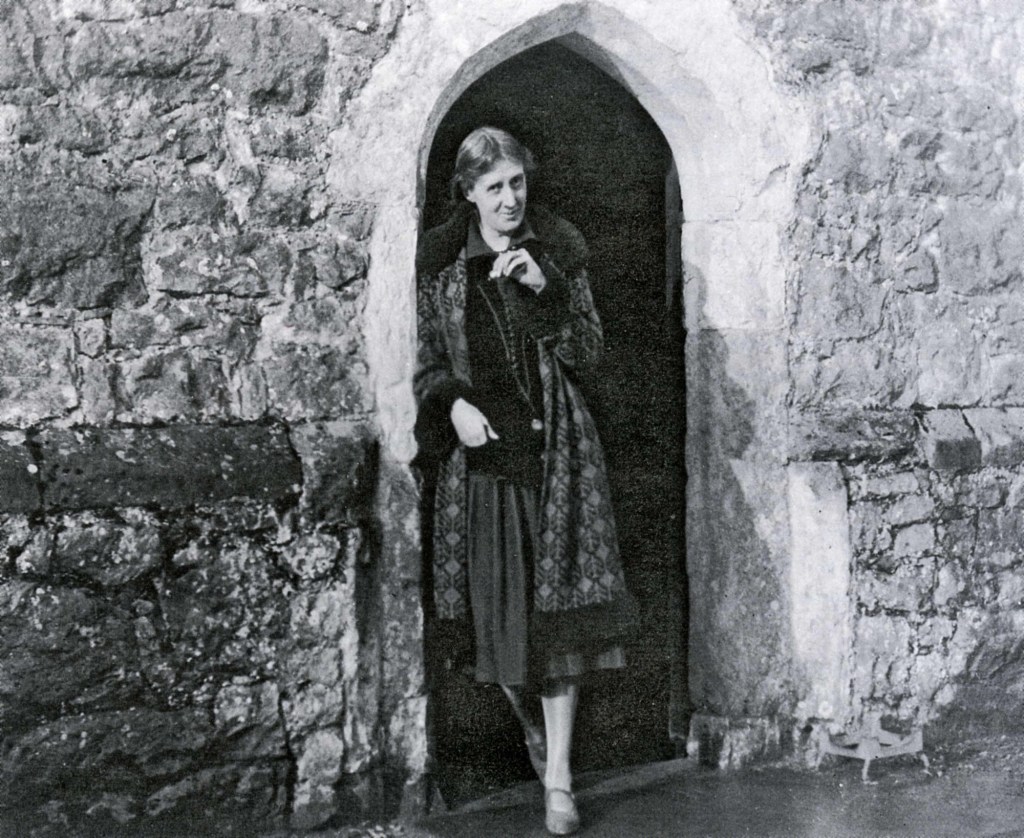
The author Virginia Woolf, a driving force behind the Bloomsbury group, at Knole House, Kent, in 1928. Photograph: Pictorial Press Ltd/Alamy
The Virginia Woolf Society of Great Britain is a non-profit organisation that aims to raise the profile of Virginia Woolf and promote the reading and discussion of her works.
Honorary President: Dame Eileen Atkins*
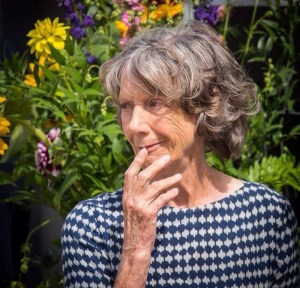
Eileen Atkins is an esteemed English actress and screenwriter, known for her powerful performances on stage, film, and television. Born on June 15, 1934, in London, Atkins has had a distinguished career that spans over six decades, making her one of the most respected figures in the British entertainment industry.
Atkins began her acting career in the theatre, where she quickly gained a reputation for her skill and versatility. She trained at the Guildhall School of Music and Drama and made her professional stage debut in the early 1950s. Throughout the years, she has become particularly renowned for her work in classical theatre, with standout performances in plays by Shakespeare, Chekhov, and Pinter. Her portrayal of characters in productions like “The Winter’s Tale” and “The Height of the Storm” have earned her critical acclaim and numerous awards, including several Olivier Awards.
In addition to her stage work, Atkins has had a significant impact on British television and film. She co-created the iconic television series “Upstairs, Downstairs” (1971-1975), which was a major success and remains a classic in British TV history. She also contributed to the creation of the series “The House of Eliott” (1991-1994), further demonstrating her talent as a writer.
As an actress, Atkins has appeared in a wide range of television series and films, earning praise for her performances. She has taken on roles in notable films such as “Gosford Park” (2001), “The Hours” (2002), and “Cold Mountain” (2003). On television, her work in series like “Cranford” (2007) and “Doc Martin” (2004-present) has been particularly well-received, showcasing her ability to bring depth and authenticity to her characters.
Atkins has also received numerous accolades throughout her career, including a BAFTA Award, an Emmy Award, and a Screen Actors Guild Award. In 1990, she was appointed a Commander of the Order of the British Empire (CBE), and in 2001, she was made a Dame Commander of the Order of the British Empire (DBE) in recognition of her contributions to drama.
Dame Eileen Atkins continues to be a formidable presence in the world of acting, with a legacy that has significantly influenced British theatre and television. Her dedication to her craft and her ability to embody a wide range of characters have made her a beloved and respected figure in the arts.
The Virginia Woolf Podcast
“This is The Virginia Woolf Podcast, which is made in association with Literature Cambridge. My name is Dr. Karina Jakubowicz, and in this series, I discuss one of our greatest writers with a host of fascinating guests, all of whom are united by one thing. They’re all fans of Virginia Woolf.”
Dr. Karina Jakubowicz
There is a lot to delve into here but three particular episodes are most relevant:
This is the first of two episodes created to celebrate 100yrs since the day on which Mrs Dalloway is set.
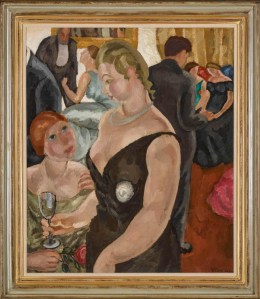
Mrs Dalloway’s Party, a rediscovered 1920 painting by Vanessa Bell, may have inspired her sister Virginia Woolf to write her famous novel Mrs Dalloway.Photograph: Sothebys
This episode focuses on a mysterious painting by Vanessa Bell and explores its possible connection to Mrs Dalloway. Karina speaks with the painting’s owner, Howard Ginsberg, and the bestselling author of Bloomsbury Pie, Regina Marler in order to think about paintings and parties in 1920s Bloomsbury.
An intriguing conversation about a picture painted by Vanessa Bell in 1920 which was exhibited in 1922 as ‘The Party’. It came into Virginia Woolf’s possession then having been forgotten for many years it was bought by American playwright Howard Ginsberg.
Ginsberg bought the painting from d’Offay and kept it in his San Francisco home for the next 40 years, eventually writing a play called The Mysterious Gift to Virginia Woolf about the hidden importance of the work to the two sisters.
Article – Discovered: a lost possible inspiration for Virginia Woolf’s Mrs Dalloway – by Victoria Thorpe in The Guardian (2024)
BloggingWoolf – watch a reading of a play based on Vanessa Bell painting
Listing: Vanessa Bell, The Party – Sotheby’s
2024: Sotheby’s Modern British and Irish Art week.
WoolfsArtArchive | Woolf Arts Archive –WAA– is a global project devoted to the collection and appreciation of art inspired by the life and works of Virginia Woolf.
2. Professor Dame Gillian Beer on Mrs Dalloway
A lecture
Professor Dame Gillian Beer Bio (Clare Hall Cambridge)
3. Mrs Dalloway at 100 by Mark Hussey
Mark Hussey talks about his novel Mrs Dalloway: Biography of a Novel.
Literature Cambridge
Literature Cambridge Ltd is an independent educational organisation providing top-quality courses on the best of Classical literature and literature in English.
Courses are taught by leading academics and are open to all.
Find out more: Literature Cambridge | Literature Cambridge Blog
Follow on: Substack | Instagram @litcamb | LinkedIn
Symposium: MRS DALLOWAY SYMPOSIUM –
On 31 October 2025, the School of English at the University of St Andrews is hosting a symposium to celebrate the 100th anniversary of Mrs Dalloway, and all are welcome to the party.
Symposium on Mrs Dalloway, which is being co-organised by Literature Cambridge Lecturer, Ellie Mitchell. Literature Cambridge Director, Trudi Tate, will be giving a paper on her new edition of Mrs Dalloway for Oxford World’s Classics.
Registration is now open for this event: Register
The British Library
Virginia Woolf’s Mrs Dalloway
Professor Elaine Showalter explores modernity, consciousness, gender and time in Virginia Woolf’s ground-breaking work, ‘Mrs Dalloway’. The film is shot around the streets of London, as well as at the British Library and at Gordon Square in Bloomsbury where Virginia and her siblings lived in the early 20th century. The film offers rare glimpses into the manuscript draft of the novel.
Explore more films, together with hundreds of literary treasures, at the:
British Library Discovering Literature contains –
Virginia Woolf’s London – article by David Bradshaw (25 May 2016)
V & A Museum
Art Deco explore –
Spanning the boom of the roaring 1920s through to the bust of the Depression-ridden 1930s, Art Deco drew on timeworn traditions while simultaneously celebrating the modern, mechanised world. This extraordinary blend of tradition and progress, combined with a lively eclecticism, is found throughout the V&A’s Art Deco objects.
More
History.com – Influential English writer Dorothy Richardson, whose stream-of-consciousness style will influence James Joyce and Virginia Woolf, is born on May 17, 1873.
The Bloomsbury Pamphlets from Persephone
Persephone are offering for sale nearly eighty different pamphlets originally published by the late Cecil Woolf (Virginia and Leonard Woolf’s nephew) in the Bloomsbury Heritage series. They cost £8 each and there is a flat fee of £3.00 for postage within the UK. (If you are ordering them to be sent abroad, the price will be shown at checkout.) You can select and buy any of the pamphlet(s) you would like below.
Bloomsbury Pamphlets – Buy
Author
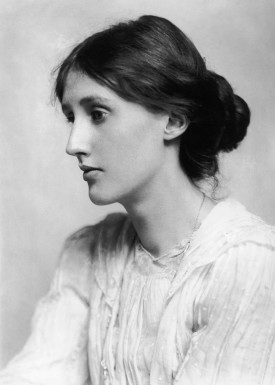
Virginia Woolf (1882–1941) was a Modernist writer, widely considered to be one of the most important of the twentieth century.
She and her husband Leonard bought a hand-printing press in 1917, and they set up Hogarth Press in their house in Richmond, which published much of Virginia’s work, as well as those of friends and fellow luminaries. She was a member of the Bloomsbury Set – an artistic, philosophic and literary group which included John Maynard Keynes, E.M. Forster and Lytton Strachey.
Today she is best remembered for her novels – in particular To the Lighthouse and Mrs Dalloway – and her essay A Room of One’s Own.
A short biography (VWSGB)
Major Works
THE VOYAGE OUT (1915) | THE MARK ON THE WALL (1917) | KEW GARDENS (1919) | NIGHT AND DAY (1919) | MONDAY OR TUESDAY (1921) | JACOB’S ROOM (1922) | MR. BENNETT AND MRS. BROWN (1924) | THE COMMON READER (1925) | MRS. DALLOWAY (1925) | TO THE LIGHTHOUSE (1927) | ORLANDO: A BIOGRAPHY (1928) | A ROOM OF ONE’S OWN (1929) | THE WAVES (1931) | THE COMMON READER: SECOND SERIES (1932) | FLUSH: A BIOGRAPHY (1933) | THE YEARS (1937) | THREE GUINEAS (1938)| ROGER FRY: A BIOGRAPHY (1940) | BETWEEN THE ACTS (1941)
A List of the Principal Works of Virginia Woolf
For more information on Virginia Woolf and her writing visit the Virginia Woolf Society of Great Britain

 Janet - LoveBooks, ReadBooks: A readers musings, thoughts and reviews
2 responses to “Mrs Dalloway by Virginia Woolf #1925Club @RenardPress”
It’s a remarkable book, isn’t it, and I think you’re right about letting the book flow as you read it. Her writing is so beautiful that it doesn’t matter if you pick up every nuance on the first read, and it definitely warrants a revisit or two!
LikeLiked by 1 person
Exactly so.
LikeLiked by 1 person