
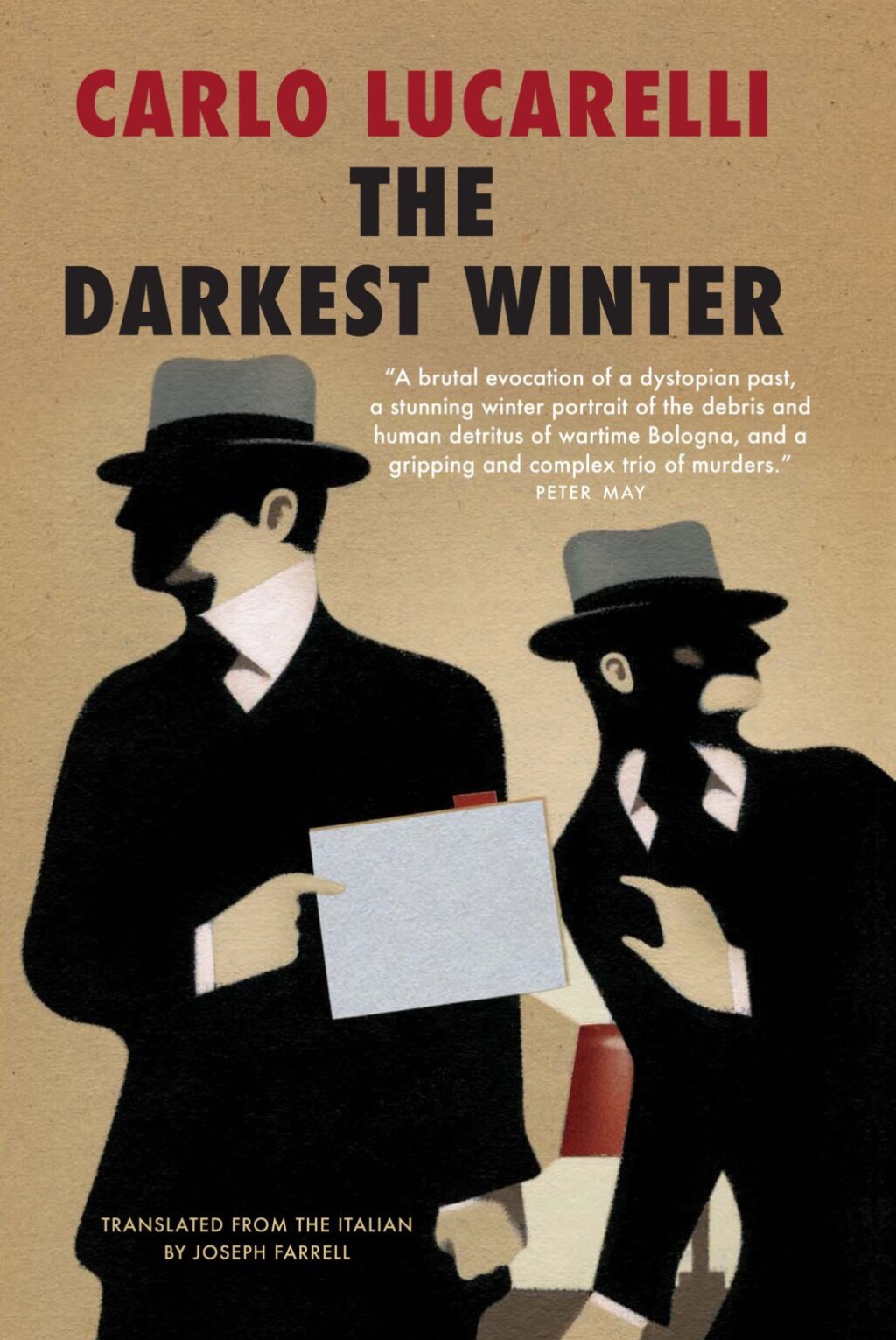
The pitch-black prequel to the Inspector De Luca quartet, by the master of Italian Noir.
Bologna, 1944. World-weary Comandante De Luca is tasked with investigating three brutal murders, with the lives of ten Italian hostages on the line.
Book blurb
In November 1944, in the worst winter ever known in Bologna, in the depths of the war, the bomb-scarred streets are home to starving refugees who have fled the advancing Allies. The Fascist Black Brigades, the officers of the S.S. and the partisans of the Italian Resistance compete for control of the city streets in bloody skirmishes.
Comandante De Luca, who has proved himself “the most brilliant investigator” in Bologna, but who is now unwillingly working for the Political Police in a building that doubles as a torture facility, finds himself in trouble when three murders land on his desk: a professor shot through the eye, an engineer beaten to death, and a German corporal left to be gnawed on by rats in a flooded cellar.
De Luca must rapidly unravel all three cases with ten lives on the line: ten Italian hostages who will face a Nazi firing squad if the corporal’s killing is not solved to the German command’s satisfaction.
As he navigates a web of personal and political motivations – his life increasingly at risk – De Luca will not stop until he has uncovered the dangerous secrets concealed in the frozen heart of his city.
My thoughts
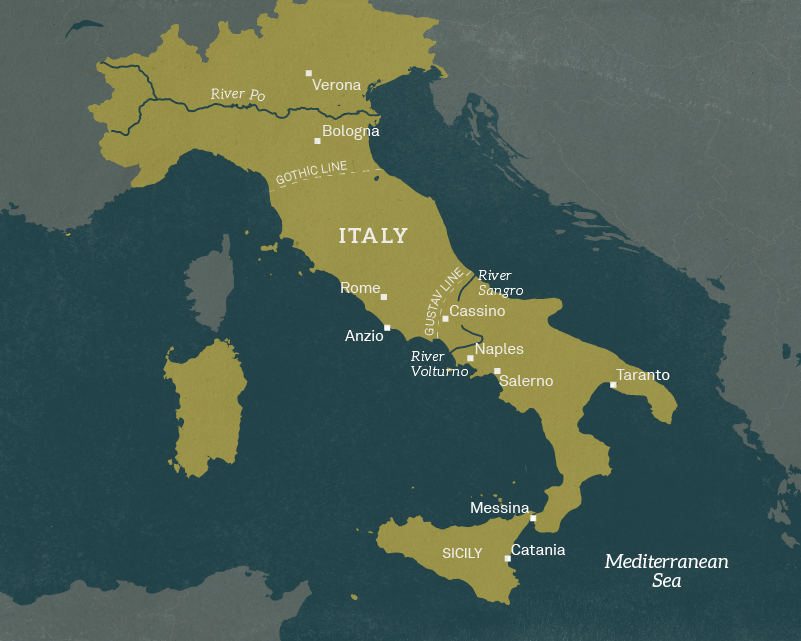
The Allies began the invasion of Italy in July 1943 it was to be a long and arduous battle. The terrain, weather, intermittent availability of resources for the allied army and the wily enemy stop started the Allied advance and it was to be a hard fought battle by battle campaign over the next ten months. With a further landing at Anzio in January 1944 of allied troops, around 70 miles behind enemy lines, there would be months of fighting before finally they could move out. The bloody battle for Cassino which was finally taken in May 1944 meant that Rome wasn’t taken until June and so the Allied forces finally reached the Gothic Line by September 1944. Bad weather was to keep them from advancing further north until April 1945 which saw Bologna taken by the Polish 2nd Corps and supporting Allied units on the 21st.
During that dark winter of 1944/45 it was the partisans who would disrupt communications, supply lines and indicate targets for Allied air attacks. In retaliation the German and Fascist Italian forces would carry out appalling reprisals on those civilians suspected of aiding the Allies.
This book has continued my interest in reading about Italy as the Second World War comes towards its end and whilst there was still a lot being played out between the German and Allied forces. There is a terrific introduction, great notes and a very useful glossary in The Darkest Winter which further helped make it a fascinating read and showed why this period was indeed the darkest winter for Bologna. The story was made even more gratifying, as a crime fiction lover, by having it as the background to such a dark and gripping investigation.
Vicecomandante De Luca is second in command of an Autonomous Unit of the Political Police in the city of Bologna it’s the winter of 1944/45. De Luca is not the happiest of men, he’s a policeman not a political beast, he has a sense of justice that may well be his downfall but what goes on in the name of patriotism and the ‘bond’ between Italy and Germany grates on him. De Luca would really rather be the detective he has always been and wanted to be. So, when he finds himself with three cases to look into, he feels like he’s on safe ground even if one of the cases has very high stakes. It’s an investigation that he’s been compelled to look into – the death of a German soldier – by the Nazis were he either finds out who the murderer is or ten Italian hostages die.
It’s not long before De Luca thinks he’s close to the truth of the matter regarding the engineers death and he also has leads in the investigation into the German’s murder. The death of the professor is already solved, someone is in custody but De Luca is approached by an officer, Petrarca, who works in the passport office. The man accused is a friend who he is sure could not have committed the crime.
De Luca has to deal with some pretty bad people not only those he comes across in his investigations but those who have brought these cases to him. Even when a character seems to be reasonable and simply doing their best under difficult circumstances they can turn out to be guilty of doing terrible deeds, committing atrocities and then there are others who do not even attempt to cover up their heinous actions. The Italian resistance whose partisans are disrupting, fighting street battles, helping people to escape the German and Italian authorities are causing mayhem and the Nazi retaliations are swift and devastating.
Through all this De Luca continues to investigate and we follow him as he tries to work out what must have happened in each case this is made all the more tense because of the ten hostages, made terrifying for both the investigator and those being investigated because the thought of what might befall them at the hands of the Nazis or Black Brigades, the weather is freezing with snow and ice and we get a glimpse of how the civilians are going about their lives in Bologna as well as how De Luca has to cope with all of this and solve the crimes under threat and with a short deadline.
De Luca is nevertheless an Italian who has authority in the Italian Social Republic, commonly known as the Republic of Salo as Salo is its capital, so we must presume is an Italian Fascist. As he investigates we get to know him and he is a man with a conscience that leads him to make decisions that he might not otherwise have done and which, albeit subtly, aid the partisan cause. He also is disgusted by the methods employed by the Nazis particularly the SS and by the Italian Black Brigades. It will be interesting to see how this plays out in future books which I do hope will be forthcoming.
All in all I found The Darkest Winter an absorbing, though at times shocking and disturbing but always a very compelling story.
Thanks
Many thanks to Anne at RandomThingsTours for the invitation to join The Darkest Winter BlogTour and to Open Borders Press for an eCopy of the book for the purpose of reading and sharing my thoughts on The Darkest Winter.
BlogTour
Why not take a tour of these terrific sites then head down to the links below to get your own copy of The Darkest Winter by Carlo Lucarelli?
Information
Published: Open Borders Press (Orenda Books Ltd) | 08/05/2025 | 304pp | ISBN 9781916788749 () | £18.99
Buy: Publisher | AmazonSmileUK | Hive | Bookshop.org (affiliate link) | Your local bookshop | Your local library
Translated by Joseph Farrell

JOSEPH FARRELL is Professor Emeritus of Italian in the University of Strathclyde. He has also been theatre reviewer, translator of film scripts, novels and plays, and author of several works including a travelogue on Sicily, a biography of Dario Fo and Franca Rame as well as the biographical study, Robert Louis Stevenson in Samoa. His translations include works by Leonardo Sciascia, Vincenzo Consolo, Dario Fo and Valerio Varesi as well as Carlo Lucarelli.
Author: Carlo Lucarelli
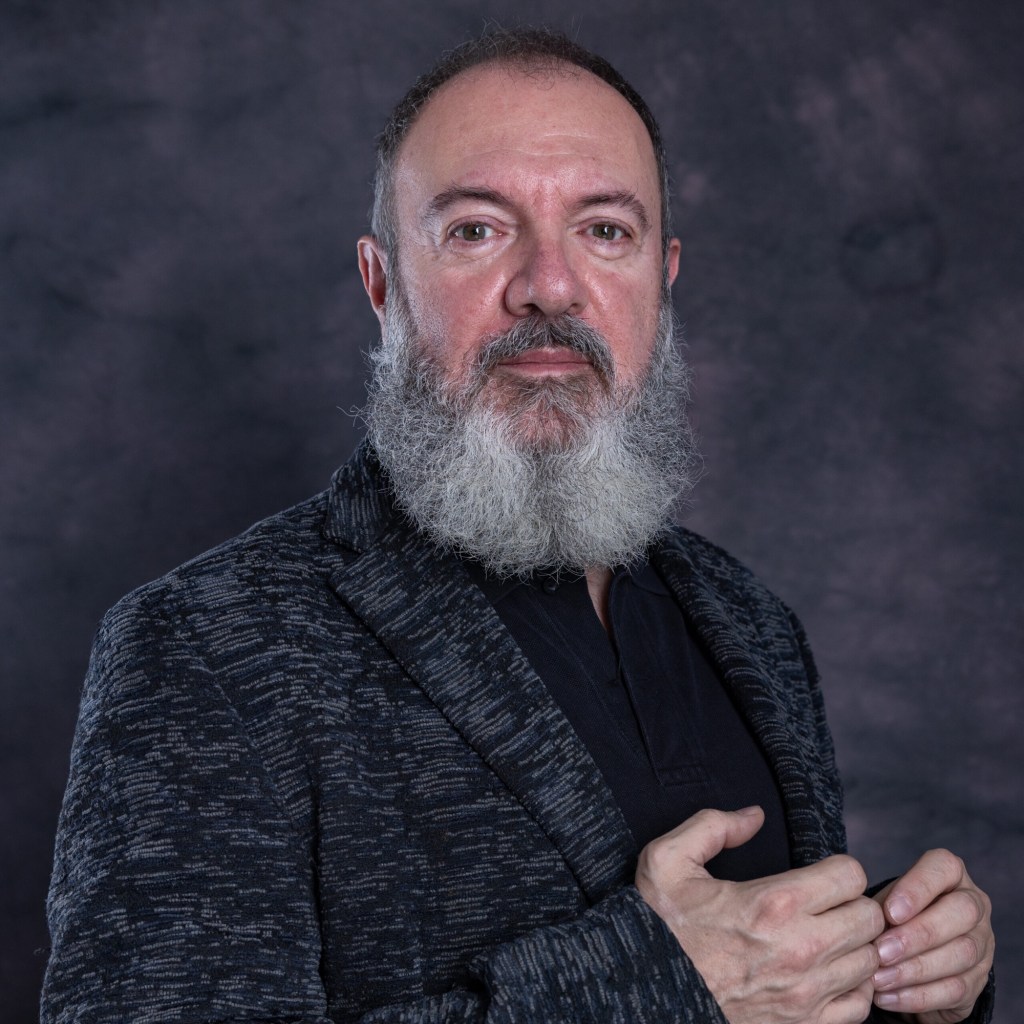
CARLO LUCARELLI was born in Parma in 1960. While researching for his thesis on the history of Italian law enforcement, he became intrigued by the Italian police force’s role in the political upheavals of the 1940s – during and after the Second World War. From this study of policing emerged his character De Luca.
Books
Carlo Lucarelli – books (FantasticFiction)
Inspector Negro
Almost Blue (2001) | Day After Day (2004)
Commissario De Luca
Carte Blanche (2006) | The Damned Season (2007) | Via Delle Oche (2008) | (Prequel) The Darkest Winter (2025)
Also by Carlo Lucarelli in English translation
Almost Blue | Day after Day | Judges
Collections
Outsiders (2013) (with others)
 Janet - LoveBooks, ReadBooks: A readers musings, thoughts and reviews
4 responses to “The Darkest Winter by Carlo Lucarelli trans. Joseph Farrell @CarloLucarelli6 @OrendaBooks #TheDarkestWinter #ItalianNoir #InspectorDeLuca #BlogTour”
Sounds fascinating. I’ve just been reading about the Italian campaign in Churchill’s history of the Second World War, and this sounds like it would be a great way to learn what life was actually like for those living through it. One for the wishlist – thanks!
LikeLiked by 1 person
It’s a fascinating time in history and if you do get to it FictionFan I hope you enjoy. Jx
LikeLiked by 1 person
Thanks for the blog tour support x
LikeLiked by 1 person
It’s always a pleasure, Anne. Jx
LikeLike