“…for the first time in her life, she was living as she had always unknowingly wanted to live: in freedom and solitude, with an animal for close companion. Her new life had acted upon her like a strong and delicious drug.”
Book blurb
Ivy Gover, a curmudgeonly middle-aged charwoman with some slightly witchy talents, inherits a rural cottage in Buckinghamshire and takes up residence near the tiny village of Little Warby. Having settled in with a rescued dog and a pet pigeon, she manages, despite her anti-social instincts, to have surprising effects on her new neighbours, including Angela Mordaunt, a spinster still mourning her dead beau, Coral and Pearl Cartaret, ditzy sisters who have just opened a tea shop, the local vicar, and wealthy Lord Gowerville, whose devotion she earns by healing his beloved dog. But her biggest challenge will likely be the 12-year-old runaway who shows up at her door…
Blending vivid characters and a deep knowledge of human nature, this is also a funny and poignant tale of the challenges and freedoms of old age and solitude. The Woods in Winter was first published in 1970 and was the last novel Stella Gibbons wrote for publication. This new edition features an introduction by twentieth-century women’s historian Elizabeth Crawford.
My thoughts
What a charming book The Woods In Winter is with the gruff yet lovable Ivy Gover who is, as the book opens, a cleaner for a young woman called Helen. Helen, along with other characters, has astute and often humorous insights.
Ivy moves out of London to the countryside of Buckinghamshire as she inherits a cottage near Little Warby when her great uncle dies. We come to see how at one Ivy is with nature and animals. As she leaves London she rescues a dog, Neb, who comes to the cottage with her and shortly after arriving a pigeon she befriended in London turns up at the cottage along with the mice and cockroaches already in residence she settles down into a contented life. She’s not daft either her life experience has given Ivy good instincts, when she needs them, with the humans she’s not always too keen on.
We see some of the folk we met in London – Helen, the Cartaret sisters – in Buckinghamshire and new characters Angela, Lord Gowerville, the vicar. All adding to this wonderful story, bringing both humour and a sense of the mores of life between the wars.
When a young lad, Mike, comes into Ivy’s world he presents her with a new challenge and we see yet another side to Ivy.
Stella Gibbons writes quite beautifully of the landscape with a strong wit and a sharp eye for the changing balance in society that occurred during this period and clear hints of what was surely coming in the future (perhaps with the help of hindsight). Her characters are, whether lovable or not, terrific and brought wonderfully alive under her pen.
I loved reading this book and was appreciative of the final chapter which gave a really good reflection on what becomes of Ivy and the rest of the characters.
Book: Purchased
1970 Club
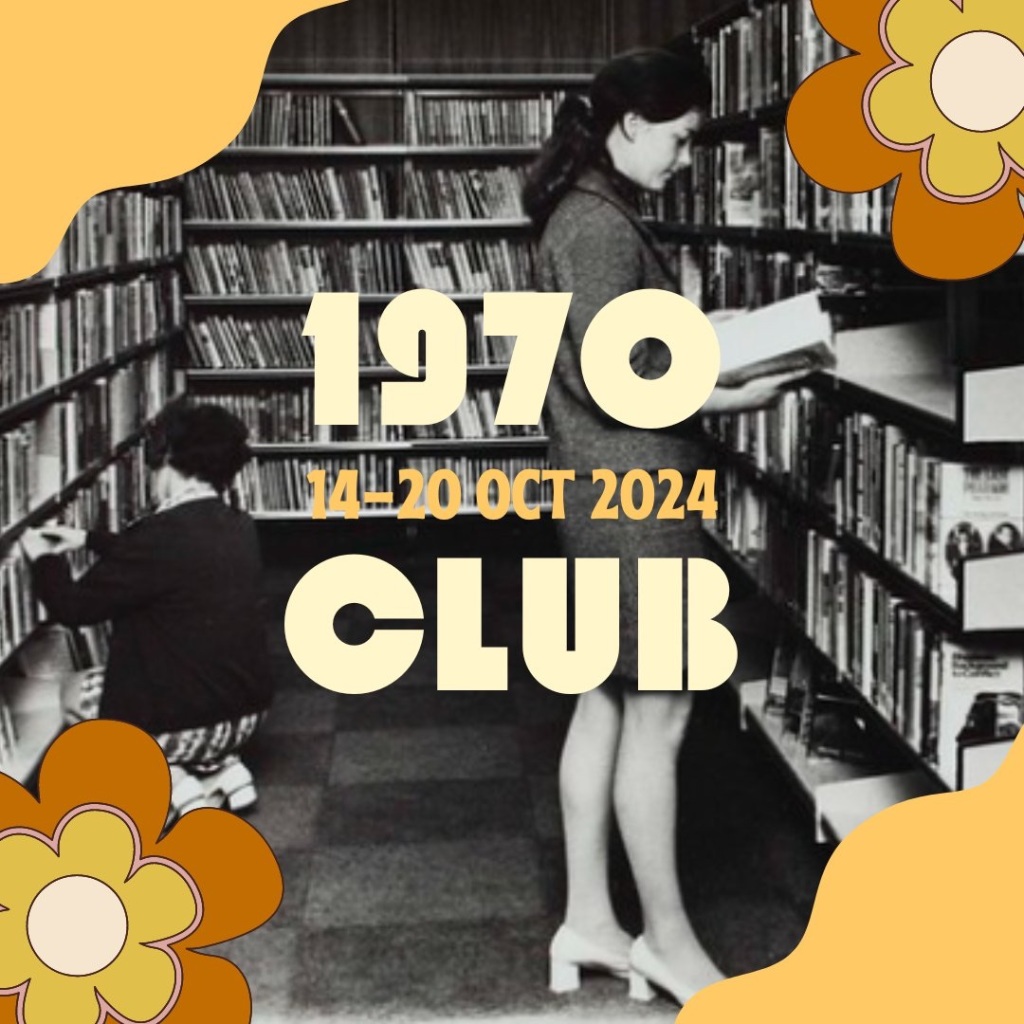
Hosted by Simon at stuckinabook and Karen at Kaggsy’s Bookish Ramblings this is a relaxing challenge simply read a book published in 1970 and share your thoughts on it wherever you usually do so and then pop your link on either Simon or Karen’s link page or simply leave your thoughts in one of their comment box. Engage as much as or want or can, read as much as you want or can over the week. You can use the hashtag #1970Club on social media should you wish to.
Information
Published: A Furrowed Middlebrow Book FM63 | Published by Dean Street Press 2021 | ISBN: 978 1 913527 81 5 (paperback) / (ebook) 978 1 913527 82 2
Copyright © 1970 The Estate of Stella Gibbons | Introduction copyright © 2021 Elizabeth Crawford
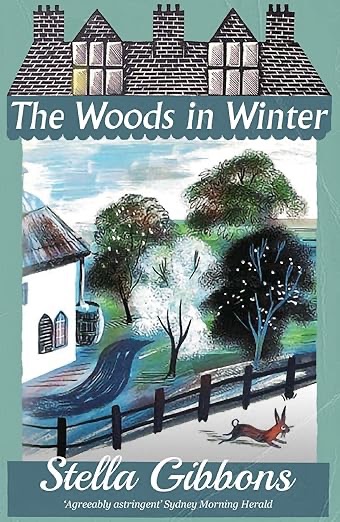
Cover by DSP | Shows detail from an illustration by Leslie Wood. The publisher thanks the artist’s estate and the archives of Manchester Metropolitan University
First published in 1970 by Hodder & Stoughton
List of Dean Street Press | Furrowed Middlebrow – 20th Century Women’s Fiction books
Buy: AmazonSmileUK |
Buy all books: AmazonSmileUK |
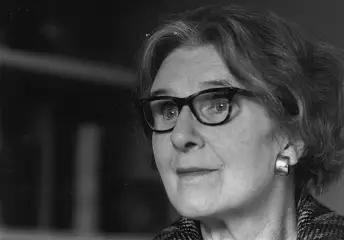
Author
Stella Dorothea Gibbons was born in 1902 in London. She was educated first at home, then the North London Collegiate School for Girls, and finally at University College, London, where she did a two-year course on journalism. Her first job, in 1923, was as cable decoder for British United Press. For the next decade she worked as a London journalist for various publications, including the Evening Standard and The Lady. Her first published book was a volume of poems in 1930. This was followed by the classic comic novel Cold Comfort Farm (1932) which remains her best-known work. In 1933 she met and married Allan Webb, an actor and singer, the marriage lasting until the latter’s death in 1959. From 1934 until 1970, Stella Gibbons published more than twenty further novels, in addition to short stories and poetry, and there were two further posthumously-published full-length works of fiction. She was a fellow of the Royal Society of Literature, and was awarded a Femina Vie-Heureuse prize in 1933 for Cold Comfort Farm. Stella Gibbons died on 19 December 1989 at home in London.
Stella Gibbons – Dean St Press
Beyond Cold Comfort Farm – Stella Gibbons other works by Sam Jordison (Sam Jordison looks after the Guardian’s Reading group and the weekly Tips, Links and Suggestions page. He is a co-director of Galley Beggar Press and the co-editor of the Crap Towns series of books. You can follow him on Twitter.) Fri 27 Dec 2013, The Guardian
Books
Novels
Cold Comfort Farm (1932) | Bassett (1934) | Enbury Heath (1935) | Miss Linsey and Pa (1936) | Nightingale Wood (1938) | My American (1939) | The Rich House (1941) | Ticky (1943) | Westwood (1946) | The Matchmaker (1949) | Conference at Cold Comfort Farm (1949) | The Swiss Summer (1951)* | Fort of the Bear (1953) | The Shadow of a Sorcerer (1955) | Here Be Dragons (1956) | White Sand and Grey Sand (1958) | A Pink Front Door (1959)* | The Weather at Tregulla (1962)* | The Wolves Were in the Sledge (1964) | The Charmers (1965) | Starlight (1967) | The Snow-Woman (1969)* | The Woods in Winter (1970)* | The Yellow Houses (written c.1973, published 2016) | Pure Juliet (written c.1980, published 2016)
* published by Furrowed Middlebrow and Dean Street Press
Story Collections
Roaring Tower and Other Stories (1937) | Christmas at Cold Comfort Farm (1940) | Beside the Pearly Water (1954)
Children’s Fiction
The Untidy Gnome (1935)
Poetry
In September 1927, she published in the literary journal The Criterion, edited by T. S. Eliot, the poem The Giraffes which received great reviews from Virginia Woolf.
She published two collections of poetry in the 1930s, the latter of which, The Lowland Verses (1938) contains The Marriage of the Machine, an early lament on the effects of industrial pollution: What Oil, What Poison lulls/Your wings and webs, my cormorants and gulls?. The other The Mountain Beast and Other Poems. In 1950 Gibbons published her Collected Poems.


3 responses to “The Woods in Winter by Stella Gibbons @FurrowedMiddle @DeanStPress #1970Club”
I really liked this when I read it last year. I think I’ve made me way through all of the DSP Stella Gibbon reissues except for The Weather at Tregulla, which I am planning to read for Dean Street December.
LikeLiked by 1 person
So glad you enjoyed this book too. I can understand why you would read all the DSP Stella Gibbons reissues and I hope your final book for Dean Street December is as good as the rest.
LikeLike
This one was a really popular choice for 1970, and it does sound good!
LikeLiked by 1 person