
Part of the Louis L’Amour’s Lost Treasures series.
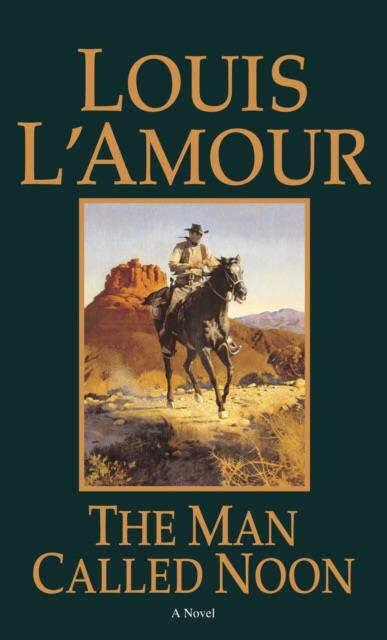
Book blurb
In one swift moment a fall wiped away his memory. Now all he knew for certain was that someone wanted him dead—and that he had better learn why. But everywhere he turned there seemed to be more questions—or people too willing to hide the truth behind a smoke screen of lies. He had only the name he had been told was his own, his mysterious skill with a gun, and a link to a half million dollars’ worth of buried gold as evidence of his past life. Was the treasure his? Was he a thief? A killer? He didn’t have the answers, but he needed them soon. Because what he still didn’t know about himself, others did—and if he didn’t unlock the secret of his past, he wasn’t going to have much of a future.

My thoughts
A man shot in the head escapes from his killer! He finds himself in a dark alley not knowing what has happened, who is trying to kill him or why, nor even his name. Realising he needs to get away and work out what his next step should be he heads toward the railroad. He overhears two men talking and realises it’s about him saying that it was a man called Ben Janish that had shot him. He jumps onto a train and whilst he’s travelling checks his pockets.
One hand emerged with a small sack that proved to contain ten gold eagles and some odd coins. There was also a small but solid packet of greenbacks, but he did not take the time to count them. The other pocket contained a strong clasp knife, a white handkerchief, a waterproof matchbox, a tight ball of rawhide string, and three keys on a key chain. The side pockets of the coat contained nothing at all, but the inside pocket paid off with some kind of legal document and two letters. The letters were addressed to Dean Cullane, El Paso, Texas. Was that who he was? He spoke the name aloud, but it evoked no response in his memory.
With help from a stranger, J. B. Rimes when introduced, who tells him that there’s a posse at next stop waiting to hang him. He says is name is Jonas. Jumping off the train he ends up travelling with Rimes to the Rafter D ranch owned by Fan Davidge. Her foreman is Arch Billing. Henneker, is a ranch hand, he knows more about Jonas than he lets on. The ranch has been taken over by an outlaw gang led by Ben Janish!
Jonas stays a few days at the ranch and explores the area as one of the documents he has indicated a property close by. After checking it out he takes off via a secret route to try and find the person that the letter was addressed to – Dean Cullane in El Paso. He also learns that Ruble Noon was friends with Tom Davidge and he had signed over the property and land near Rafter D. So was he, Jonas, Cullane or Noon? Are they one and the same person? He needs to find out, he needs to go to El Paso.
By the time he gets to El Paso he’s pretty sure he knows who he is but still goes by the name of Jonas Mandrin. After yet another attempt to kill him he sees off several men whilst waiting in an adobe until it’s dark enough to enter the town. In El Paso he meets a young woman Peg Cullane, a school friend of Fan, and a judge, Judge Niland, who helps him out of a difficult situation.
We follow Jonas as he continues to find out what exactly is going on. He had taken a strong liking to Fan and wanted to help get rid of Ben Janish and the other outlaws at Rafter D. He also finds out that there is supposedly a treasure somewhere on the ranch known about by a few people and this was probably why he was being hunted. Not that he knows anything having lost his memory! Still the book progresses at a good pace and is a captivating read. We have a great adventure with Jonas as he pieces together his own story and finds a way to overcome the challenges that face him and Fan until the inevitable shootout brings a satisfying conclusion.
This is a terrific book and as much, if not more, a mystery as a western. It also raises questions around whether a person can reinvent themselves in this instance after suffering insomnia. Can you really put what may be a difficult or appalling even evil past to one side and become someone altogether different? Or, as happens here face what you are, were and then make the appropriate changes, can that be done? Or do we perhaps have to learn to accept and even embrace what we are and positively change to put our abilities to work for good, to become better despite what we may have done in the past? I had been attracted to it as I often saw my father read a Louis L’Amour book when I was young. He and I loved to watch a western on TV but I had never read anything by L’Amour previously. I’m glad I did read The Man Called Noon by Louis L’Amour it’s a terrific story, well written, the ‘wild west’ is a wonderful setting and clearly one the author knew well, all in all an entertaining and enjoyable story.
Book: Purchased

The 1970 Club
Hosted by Simon at stuckinabook and Karen at Kaggsy’s Bookish Ramblings this is a relaxing challenge simply read a book published in 1970 and share your thoughts on it wherever you usually do so and then pop your link on either Simon or Karen’s link page or simply leave your thoughts in one of their comment box. Engage as much as or want or can, read as much as you want or can over the week. You can use the hashtag #1970Club on social media should you wish to.
Information
Published: Bantam (30 April 2019) | ISBN 0808517155 | 231pp
Buy: AmazonSmileUK | Hive | PenguinRandomHouse (USA links)| Your local library | Your local bookshop
Louis L’Amour books on PenguinRandomHouse | bookshop.org | Hive | AmazonSmileUK
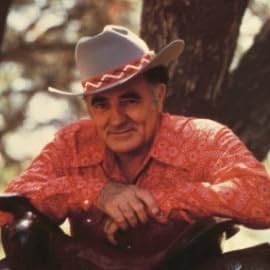
“I think of myself in the oral tradition–as a troubadour, a village tale-teller, the man in the shadows of a campfire. That’s the way I’d like to be remembered–as a storyteller. A good storyteller.”
Louis L’Amour
Author
It is doubtful that any author could be as at home in the world re-created in his novels as Louis Dearborn L’Amour. Not only could he physically fill the boots of the rugged characters he wrote about, but he literally “walked the land my characters walk.” His personal experiences as well as his lifelong devotion to historical research combined to give Mr. L’Amour the unique knowledge and understanding of people, events, and the challenge of the American frontier that became the hallmarks of his popularity.
Of French-Irish descent, Mr. L’Amour could trace his own in North America back to the early 1600s and follow their steady progression westward, “always on the frontier.” As a boy growing up in Jamestown, North Dakota, he absorbed all he could about his family’s frontier heritage, including the story of his great-grandfather who was scalped by Sioux warriors.
Spurred by an eager curiosity and desire to broaden his horizons, Mr. L’Amour left home at the age of fifteen and enjoyed a wide variety of jobs, including seaman, lumberjack, elephant handler, skinner of dead cattle, and miner, and was an officer in the transportation corps during World War II. During his “yondering” days he also circled the world on a freighter, sailed a dhow on the Red Sea, was shipwrecked in the West Indies and stranded in the Mojave Desert. He won fifty-one of fifty-nine fights as a professional boxer and worked as a journalist and lecturer. He was a voracious reader and collector of rare books. His personal library contained 17,000 volumes.
Mr. L’Amour “wanted to write almost from the time I could talk.” After developing a widespread following for his many frontiers and adventure stories written for fiction magazines, Mr. L’Amour published his first full length novel, Hondo, in the United States in 1953. Every one of his more than 120 books is in print; there are more than 300 million copies of his books in print worldwide, making him one of the bestselling authors in modern literary history. His books have been translated into twenty languages, and more than forty-five of his novels and stories have been made into feature films and television movies.
The recipient of many great honors and awards, in 1983 Mr. L’Amour became the first novelist to ever to be awarded the Congressional Gold Medal by the United States Congress in honor of his life’s work. In 1984 he was also awarded the Medal of Freedom by President Reagan.
Louis L’Amour died on June 10, 1988. His wife, Kathy, and their two children, Beau and Angelique, carry the L’Amour publishing tradition forward with new books written by the author during his lifetime to be published by Bantam.
Louis L’Amour’s Lost Treasures Project
Louis L’Amour’s Lost Treasures is a project created to release some of the author’s more unconventional manuscripts from the family archives.
In Louis L’Amour’s Lost Treasures: Volumes 1, Beau L’Amour takes the reader on a guided tour through many of the finished and unfinished short stories, novels, and treatments that his father was never able to publish during his lifetime. L’Amour’s never-before-seen first novel, No Traveller Returns, faithfully completed for this program, is a voyage into danger and violence on the high seas. These exciting publications will be followed by Louis L’Amour’s Lost Treasures: Volume 2.
Additionally, many beloved classics will be rereleased with an exclusive Lost Treasures postscript featuring previously unpublished material, including outlines, plot notes, and alternate drafts. These postscripts tell the story behind the stories that millions of readers have come to know and cherish.



 Janet - LoveBooks, ReadBooks: A readers musings, thoughts and reviews
3 responses to “The Man Called Noon by Louis L’Amour #1970Club @kaggsy59 @stuck_inabook”
[…] A Man Called Noon by Louis D’Amour […]
LikeLike
I was all ready to think this wouldn’t appeal to me, but it certainly sounds like it’s not just a western tale – how interesting! I suspect my Dad read L’Amout back in the day and he does sound worth exploring!
LikeLiked by 1 person
He was certainly prolific! Probably worth a try for a lighter read. He did more than westerns and even they seem to be as you say not just a western tale.
LikeLiked by 1 person