
Lá Fhéile Pádraig Sona Daoibh! Happy St Patrick’s Day!
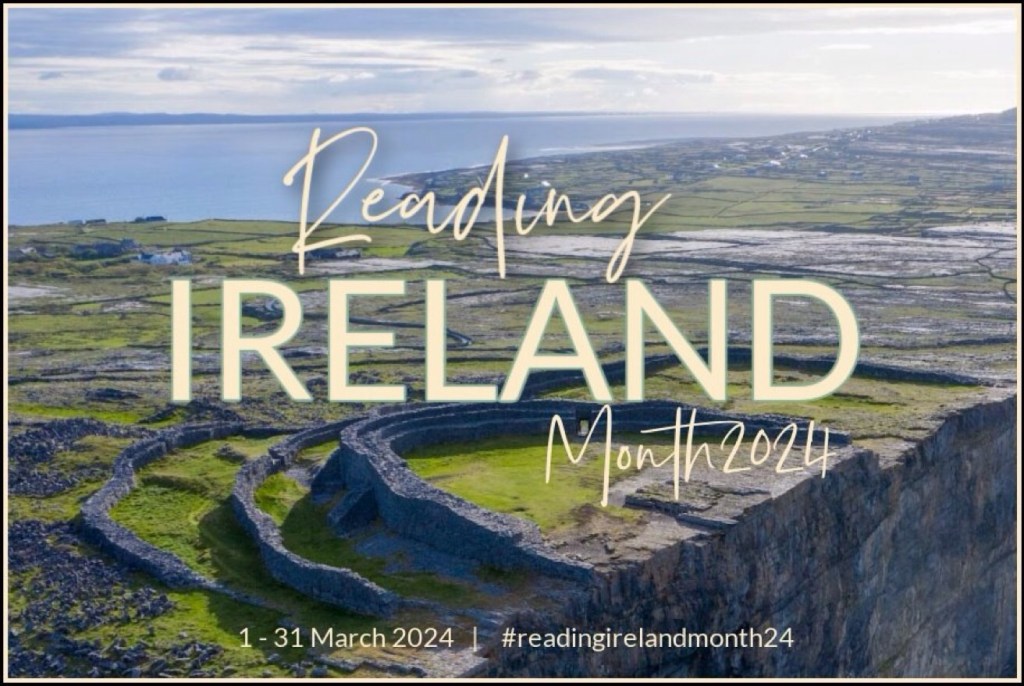
The Begorrathon
Reading Ireland Month, fondly known as The Begorrathon, is now in its eight year! It’s a lovely challenge that allows us to explore all the amazing authors who come from across the Irish Sea from the U.K. and across the Irish Sea, English Channel, North Sea from Europe, Iceland and all places middle and far East; or the Atlantic from the USA, Canada or South America and the Pacific and Atlantic for all places West. Please excuse any geographical errors what I’m saying is The Begorrathon is open to all who want to explore the writing of the wonderful place that is Ireland.
The host is Cathy @ 746books who hails from Northern Ireland and is a stalwart supporter of all the arts originating from Ireland. When you visit Cathy’s blog, which is excellent and well worth doing, you will find an amazing selection of book reviews including Irish authors along with lists of Irish authors to explore for Reading Ireland Month and throughout the year.

The Translator’s Funeral by Rónán Hession is part of the New Irish Writing series from The Irish Press.
I saw a post on X (formerly known as Twitter) by Rónán Hession which gave a link to this story.
The Translator’s Funeral by Rónán Hession in The Irish Times (Aug 13 2020)
As you will see later when trying to find the link I went down a bit of a rabbit hole regarding The Irish Press and Dolmen Press but I found it all quite interesting and thought you might enjoy it too!
My thoughts
Considering that The Translator’s Funeral is about a funeral it is a charming and funny story of how communication, a.k.a gossip, and local ‘laws’ are enacted in an Irish village.
It’s a short story coming in at 22 short, sharp chapters and a little over 2,000 words. Written by Rónán Hession as part the New Irish Writing series from The Irish Press. A quick read it may be but it packs a lot in for the readers enjoyment.
Two women are found dead by the postman whilst trying to deliver a parcel to them, the Priest gets a call and distractions mean he makes a mistake and double books the funerals! We are treated not only to the wildfire spread of news of the deaths through the village but also how the issue of the double booked funerals is resolved.
It got me thinking, having recently attended a funeral. Funerals can be quite formal affairs, not that this one was, there has to be some formality, of course, regarding the planning – time, place, readings, music and so on – there was but within that was a personal reflection of that individual and afterwards those who could came together sharing lovely stories, there was laughter and a warmth in the gathering that embraced everyone there. An acknowledging that no one would ever see this person again, a letting go if you like, as these rituals are intended but more importantly it was confirming that they would not be forgotten. That they would be kept in their hearts and memories always to remember perhaps for generations.
Communication, gossip, within the town was important so that everyone heard what happened and the people could put into action steps to make the necessary decisions and arrangements for the funeral. So gossip, as a certain Miss Marple I think would agree, is useful. The consequence of not hearing the gossip is reflected in the organists reaction. It is the ‘laws’ and what is put in place that allows the records and the history of the town to be kept.
The two women were found by the postman in their garden one was a writer the other a translator. There is some discussion about who is the more important as people wanted to decide whose funeral they would attend. The unemployed man is consulted and has his say which is later recalled when the town meets to resolve the matter of the two funerals.
In Hession’s story there is an unusual and excellent resolution to the funeral. It was somewhat surprising but one that would stay long in the town’s folks memories and mine.
This is short but perfectly formed and executed. A wonderful story which I really enjoyed it made me smile, chuckle, laugh yet it was ultimately quite moving.
Information
The Irish Press (Irish: Scéala Éireann) was an Irish national daily newspaper published by Irish Press plc between 5 September 1931 and 25 May 1995. In its early days The Irish Press was circulated throughout Ireland by a specially rented train because the rival Independent Newspapers would not rent space on its train to The Irish Press. It sustained itself with its own resources until the Sunday Press was founded in the 1940s. The Irish Press had a number of first-rate reporters and columnists. One notable section, New Irish Writing was edited by David Marcus.
In 1970 an anthology from The Irish Press series was published by Dolmen Press, compiled and edited by David Marcus.*

Publisher: Dolmen Press (1 Jan. 1970)* | Language: English | Paperback: 128 pages | ISBN-10 019647542| ISBN-13 978-019647
Further reading: The story of a newsman | NLI/Newspaper Descriptors Project/ Irish Press / Blog article
National Library of Ireland/Leabharlann Náisiúnta na hÉireann
An anthology from the Irish press series | Language: English
In collection: Dolmen Press Collection
Notes: “The stories and poems … all appeared in the New Ir…”
Subjects: “…English literature — Irish authors — 20th century….”
New Irish Writing 1: an anthology from the Irish Press series.
Marcus, David compiler.; Dolmen Press (1970)
Other
The Dolmen Press – A Celebration By Maurice Harmon
The Dolmen Press, which operated under the guiding hand of Liam Miller from 1951 to 1987, was a beacon in a dark time for Irish publishing and occupies a central position in the story of Irish poetry after Yeats. This collection of essays, edited by the scholar and poet Maurice Harmon, is a testament to the achievement of Dolmen from the hands of the people who were closest to the Press from The Lilliput Press (November 2001).
Writing Home The ‘New Irish’ Poets | A major new anthology of writing from Ireland that acknowledges and celebrates the contribution of those whose roots lie outside of the country from Dedalus Press.
Author
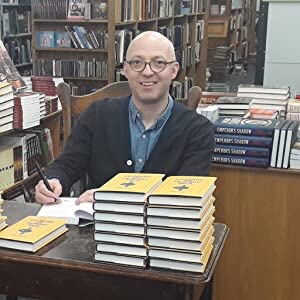
Rónán Hession is an Irish writer who lives in Dublin. His debut novel Leonard and Hungry Paul was published by Bluemoose Books in 2019. The Sunday Times chose it as one of the 50 great Irish novels of the century. It has been selected as the 2021 One Dublin One Book by Dublin UNESCO City of Literature. It was shortlisted for the An Post IrishBook Awards; Best Newcomer, Kerry Group Irish Novel of the Year. The British Book Awards, Debut Book of The Year. Books Are My Bag Awards; Fiction. The Dalkey Emerging Writer Award. The McKitterick Prize. His short story, The Translator’s Funeral was shortlisted for the An Post Irish Book Awards Writing.ie Short Story of the Year.
As Mumblin’ Deaf Ro he has released three albums of story telling songs. His third album Dictionary Crimes was shortlisted for The Choice Music Album of the Year.
He is a civil servant (Asst. Sec. General, Dept. Of Employment Affairs and Social Protection).
He lives in Portmarnock, Dublin with his wife and two sons.
Articles: Irish Times |The Word Factory – Rónán Hession on How I Wrote ‘The Translator’s Funeral’
Follow on X: @MumblinDeafRo
Books
Leonard and Hungry Paul | Paneka | Ghost Mountain


 Janet - LoveBooks, ReadBooks: A readers musings, thoughts and reviews
5 responses to “The Translator’s Funeral by Rónán Hessian #ReadingIrelandMonth24 #begorrathon24 #HappyStPatricksDay @MumblinDeafRo”
[…] The Translator’s Funeral by Ronán Hession […]
LikeLiked by 1 person
[…] also hope to read Three Little Birds by Sam Blake | The Translators Funeral by Ronán Hession | One or two of the short stories from Dubliners by James Joyce for Reading […]
LikeLiked by 1 person
[…] 50. The Translator’s Funeral by Ronan Hession – Loves Books Reads Books […]
LikeLiked by 1 person
This sounds so good! Definitely going to check this one out.
LikeLiked by 1 person
Yes, it is. It’s very short only a few minutes of reading. I hope you enjoy it too.
LikeLiked by 1 person