‘An eloquent champion of the joy of reading. Maria Popova
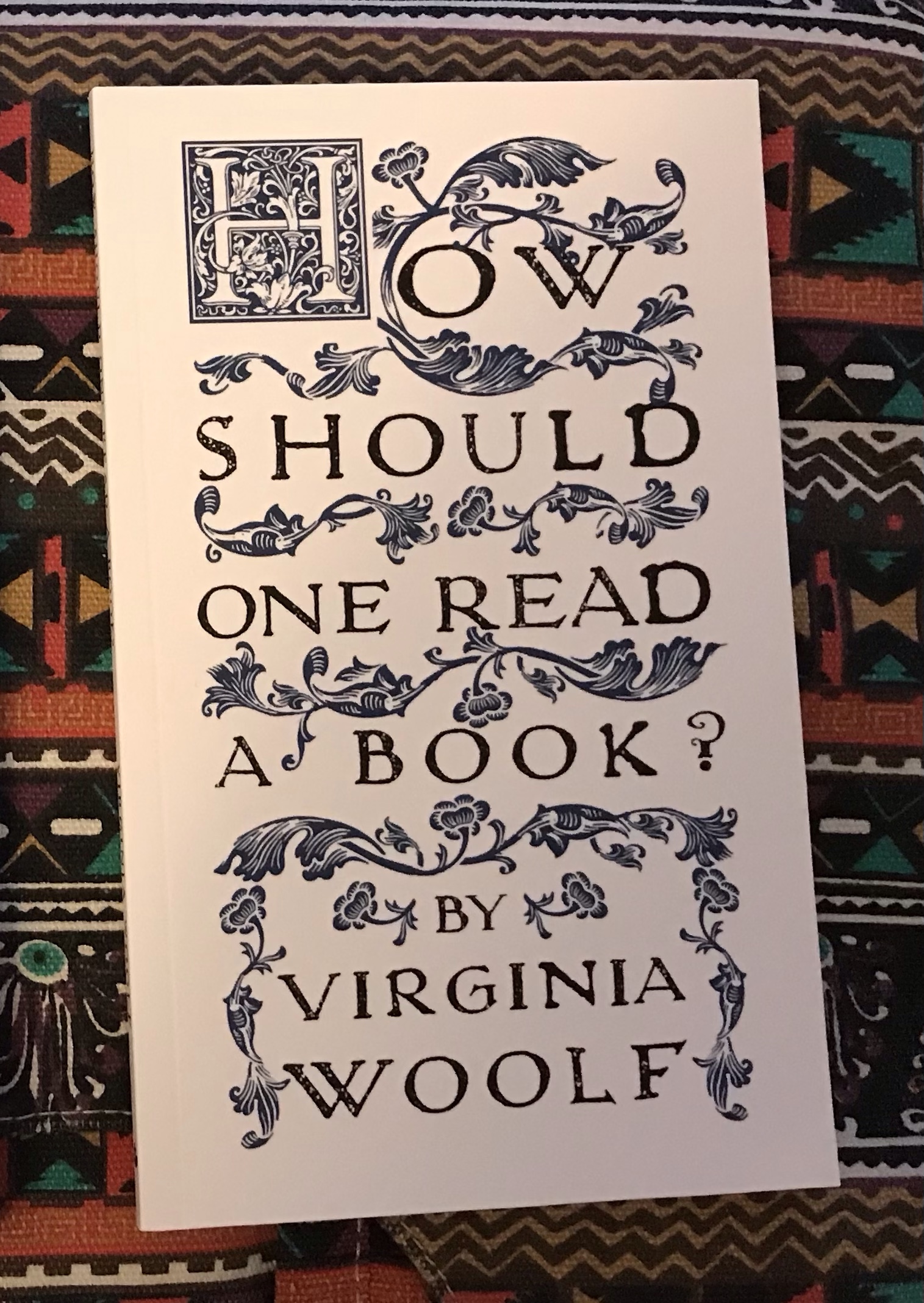
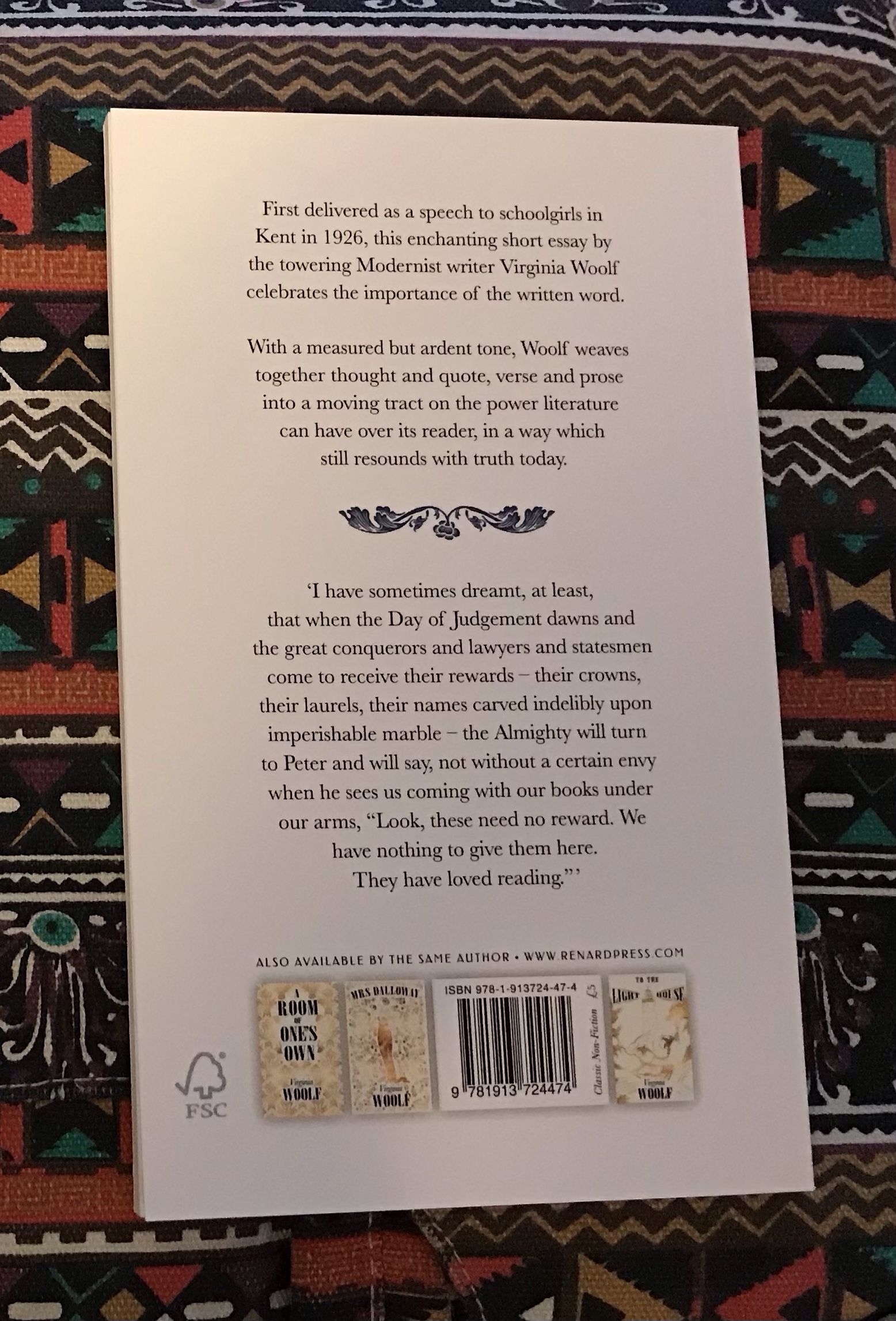
Book blurb
First delivered as a speech to schoolgirls in Kent in 1926, this enchanting short essay by the towering Modernist writer Virginia Woolf celebrates the importance of the written word.
With a measured but ardent tone, Woolf weaves together thought and quote, verse and prose into a moving tract on the power literature can have over its reader, in a way which still resounds with truth today.
“I have sometimes dreamt, at least, that when the Day of Judgement dawns and the great conquerors and lawyers and statesmen come to receive their rewards – their crowns, their laurels, their names carved indelibly upon imperishable marble – the Almighty will turn to Peter and will say, not without a certain envy when he sees us coming with our books under our arms, “Look, these need no reward. We have nothing to give them here. They have loved reading.”
Virginia Woolf

My thoughts
Virginia Woolf sets out plainly that, in fact, there is no specific way to read a book this statement is no spoiler as it opens the the text. Each of us has our own way of reading and, so answering the Title question is only possible for ourselves.
To admit authorities, however heavily furred and gowned, into our libraries and let them tell us how to read, what to read, what value to place upon what we read, is to destroy the spirit of freedom which is the breath of those sanctuaries.
Virginia Woolf, How Should One Read A Book?
Yes, she goes on to make a suggestion regarding the criticism of what is being read but still it is for the reader to decide for themselves whether they will or will not adopt a critical style of reading. Of course, at some level, everyone does criticise what they are reading if only to say that such a book is enjoyable (or not), is better (or worse) than another and so on.
How are we to bring order into this multitudinous chaos and so get the deepest and widest pleasure from what we read?
Virginia Woolf,
Nevertheless, Woolf lets the reader (or listener as this essay was originally a paper read to a school in Kent and then published in The Yale Review, 1926) know that whilst they control how they read books a degree of criticism should be given but only when the reader has given the author an open mind regarding their book.
Taking fiction, biography and poetry Woolf demonstrates how that criticism comes about. That the reader should be aware of their criticism in order to express it for school, university, professionally or simply for the benefit of their personal interest.
What a gem of a read this is!
It made me smile and thank Virginia Woolf for so clearly stating what I (and I expect many others) as a book blogger would want to hear. That we read how we prefer and criticise or review in a purely personal manner and then what we have to say on a book if read by someone is criticised in a personal way by them, for themselves.
Yes, if we are reading and reviewing for say a BlogTour we are then providing a review (criticism) for that author/publisher/tour organiser, who has provided us with the book, for that purpose. So, we are more aware of our need to consider and compare in a constructive, positive way when we are sharing our thoughts. If we have read with an open mind to what the author is saying, as Woolf states, then we should be more than able to say what we think in a considered and constructive manner thus fulfilling that purpose.
Isn’t it wonderful that such a short piece can have so much to say and offer to the reader? I have a lot of Woolf’s books (yes, I may have added one or two over the course of NovNov23) and other work on my shelves as she is a writer who has piqued my curiosity regarding her life as well as her works and I intend to read more over the coming months and years. I thoroughly enjoyed reading this.
Book: Purchased
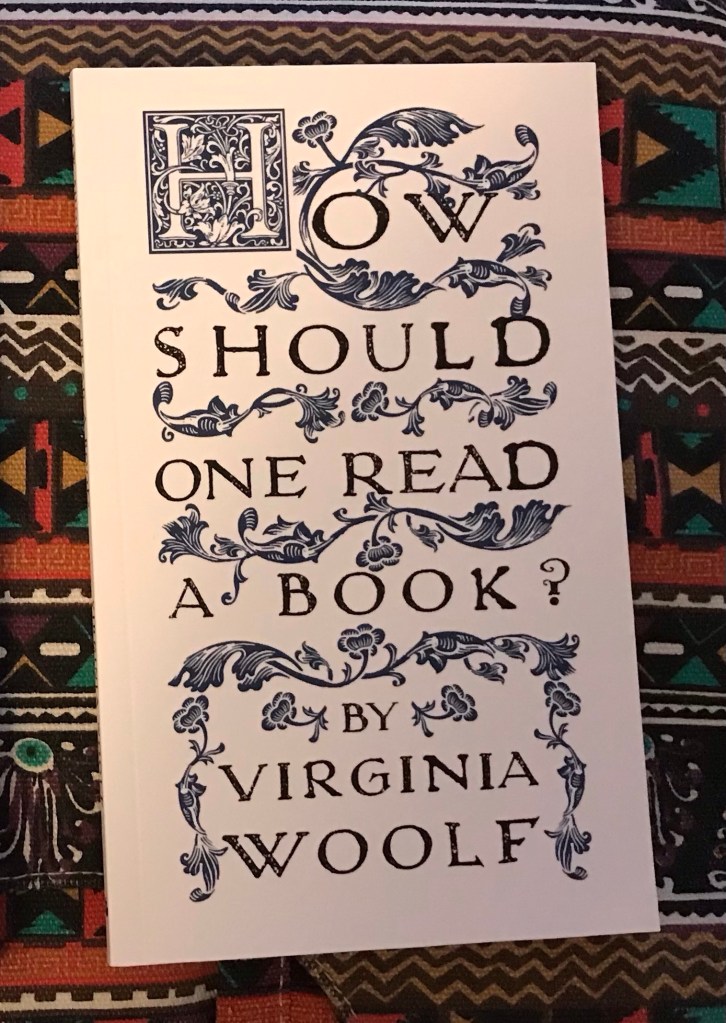
I read the lovely Renard Press edition based on the text in The Second Common Reader (1932) with some alteration (under: notes on the text) for the modern reader. Annotations kept to a minimum (under: notes).
This edition includes a biographical note on Virginia Woolf.
Renard Press is a great independent publisher of both
Information
Published: Renard Press | 11 November 2021 | Paperback | 48pp | ISBN: 9781913724474 | £5.00
RENARD PRESS is an award-winning independent publisher, launched in June 2020. Covering both classic and contemporary titles, Renard publishes fiction and non-fiction, theatre and poetry; the emphasis is on good writing, properly edited, and our books can be found in convenient modern formats – in a world increasingly lived online – as well as in beautifully designed and well-produced editions.
Virginia Woolf works also sold by Renard Press
A Room of One’s Own | In The Orchard | Kew Gardens | Mrs Dalloway | On Being Ill | Three Guineas | To The Lighthouse
Buy: Renard Press – as the publisher sells direct to customers I urge you to purchase from there if you can or from your local bookshop.
Subscribe: Renard Press have subscription options: Monthly; six months; annual –
Our subscribers are a vital part of what we do – put simply, in these difficult times, they help us to keep the lights on! Since you’ve made it to this page, I’m assuming that you like the looks of our list – if so, please consider becoming a subscriber and helping us to stay independent and keep publishing books you want to read!
Renard Press
Author: Virginia Woolf
VIRGINIA WOOLF (1882–1941) was a Modernist writer, widely considered to be one of the most important of the twentieth century.
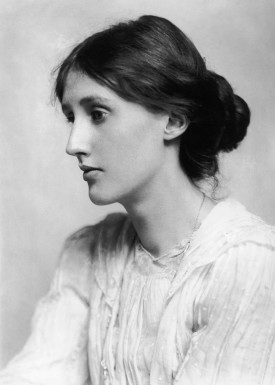
Virginia Woolf (1882–1941) was a Modernist writer, widely considered to be one of the most important of the twentieth century.
She and her husband Leonard bought a hand-printing press in 1917, and they set up Hogarth Press in their house in Richmond, which published much of Virginia’s work, as well as those of friends and fellow luminaries. She was a member of the Bloomsbury Set – an artistic, philosophic and literary group which included John Maynard Keynes, E.M. Forster and Lytton Strachey.
Today she is best remembered for her novels – in particular To the Lighthouse and Mrs Dalloway – and her essay A Room of One’s Own.
A short biography (VWSGB)
Major Works
THE VOYAGE OUT (1915) | THE MARK ON THE WALL (1917) | KEW GARDENS (1919) | NIGHT AND DAY (1919) | MONDAY OR TUESDAY (1921) | JACOB’S ROOM (1922) | MR. BENNETT AND MRS. BROWN (1924) | THE COMMON READER (1925) | MRS. DALLOWAY (1925) | TO THE LIGHTHOUSE (1927) | ORLANDO: A BIOGRAPHY (1928) | A ROOM OF ONE’S OWN (1929) | THE WAVES (1931) | THE COMMON READER: SECOND SERIES (1932) | FLUSH: A BIOGRAPHY (1933) | THE YEARS (1937) | THREE GUINEAS (1938)| ROGER FRY: A BIOGRAPHY (1940) | BETWEEN THE ACTS (1941)
A List of the Principal Works of Virginia Woolf
For more information on Virginia Woolf and her writing visit the Virginia Woolf Society of Great Britain

 Janet - LoveBooks, ReadBooks: A readers musings, thoughts and reviews
6 responses to “#NovNov23 – How Should One Read A Book? by Virginia Woolf @RenardPress”
[…] to via BBC Sounds, my copy comes in at 91pp)| The Forester’s Daughter by Claire Keegan (54pp)| How to Read a Book by Virginia Woolf (48pp)| The Hermit by Louise Walters […]
LikeLike
What a lovely edition!
LikeLiked by 1 person
Thank you, Brona. I think so, too! Renard Press do a few of these for Virginia Woolf’s shorter writing. The cover was designed by the publisher, Will Dady. If you like a little more shine/bling the novels of Virginia Woolf from this publisher might be right up your alley: https://renardpress.com/classic-fiction/?wpv_view_count=468&wpv_sort_orderby=field-wpcf-sort-form&wpv_sort_order=asc&wpv_paged=6
LikeLiked by 1 person
[…] How Should One Read A Book by Virginia Woolf […]
LikeLike
This sounds so wonderful! Definitely going to check this out.
LikeLiked by 1 person
I hope you enjoy it as much as I did, Cathy, if you do read it. Janet
LikeLike