Azúcar is an extraordinary novel… an atmospheric book, a new kind of Caribbean novel with a reach beyond the region… one of those novels that has enough heft, magic, and writerly skill to instantly transport the reader to its world, on its own terms. Monique Roffey author of the Costa winning The Mermaid of Black Conch.
“A brilliant new voice.”
Time Out
Introduction
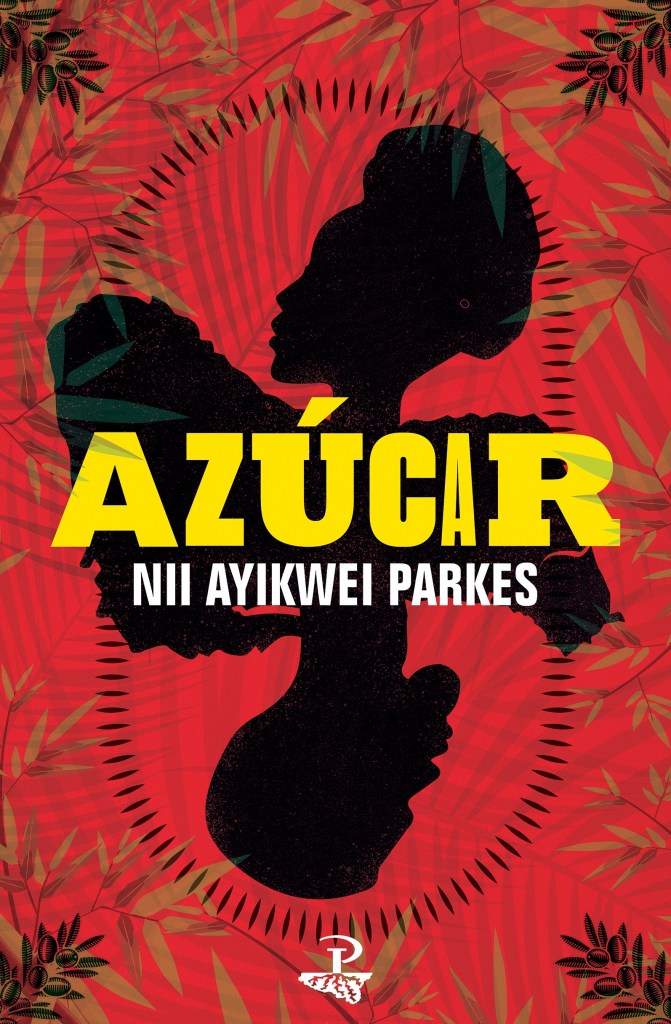
It is my huge pleasure to be hosting a Guest Post from the critically acclaimed Ghanaian-British novelist, Nii Ayikwei Parkes author of award winning novel Tail of the Blue Bird (Jonathan Cape). Part socio-political satire, part romance, Azúcar (sugar) is his long awaited second novel. Set in a world where everything is on the move: people, ideas, food and music, Azúcar is a magic realist tale set on a fictional island in the Caribbean that asks what price we pay to have a place called ‘home’?
In this Guest Post Nii Ayikwei Parkes gives us a wonderful insight into the origins behind his second book Azúcar so without further ado over to Nii.
Like its protagonist, Yunior, Nii Ayikwei Parkes’ novel sings of ‘love and loss and everyday joys’. Intensely imagined, and beautifully rendered on the page in a poet’s lyrical, precise, lush language, this story of community, of love found, lost, and found again, of roots and ties and deep connections, enacts both the music and the lush vegetal life that lie at its heart. A beautiful and moving piece of work.
Neel Mukherjee, author of Booker shortlisted The Lives of Others.
The Birth of Azúcar
When I first read the Mexican-American writer Sandra Cisneros’s The House on Mango Street in the early 1990s, I was enchanted by the incredible storytelling, but, also, one little detail jumped out at me – her narrator’s name, Esperanza. I have an aunt called Esperanza! We call her Auntie Espie, and in the Ghanaian tradition of absorbing ‘foreignness’ we had never questioned the name. In much the same way that the argument over my European surname Parkes in Ghana would be about whether it comes from Cape Coast (where a Portuguese castle sits, and many Europeans had children with local women before and during the slave trade), or from Accra (where many ex-enslaved migrants from Sierra Leone, Brazil and Liberia settled), Espie had become part of the landscape – I had never once considered the name’s Spanish lineage.
Auntie Espie, for us, was that über glamourous aunt who acted in plays, worked for the broadcasting corporation, did catering on the side (and cooked amazing meals), had razor sharp wit, and had held the national Discus Throw record for a decade before it was broken by Ghana’s multi-discipline athletics legend Rose Hart. She was part of the fabric of our childhood, where Jimmy Cliff played in the background on weekends, the vegetable garden ran wild, funny stories were told of our great-grandmother’s energetic Krio outbursts; we ate and ran and danced and climbed mango trees. Even when I realised that Auntie Espie’s name was Spanish, I didn’t think much of it until over 20 years later when I was in conversation with my late uncle, Kofi Awoonor about our family’s Sierra Leonean roots one evening in Kenya. It was the last time I sat with Uncle Kofi – the next day he was murdered in the Westgate Mall Attack. However, a seed was planted.
I knew from Sierra Leonean history texts (as a result of my great grandfather J.C.E. Parkes being a political figure there), that I had family roots in Guadeloupe and Jamaica, but I had never explored beyond that. After Uncle Kofi’s death in 2013, I started a document to establish timelines and approximate the times and dates of migration (voluntary or forced), birth and death for my scattered global ancestors. I also began to write down musings on belonging and the wealth generated by exploiting African people, which became the foundational notes for my latest novel Azúcar. Henry Louis Gates Jr. writes that “in general, black authors do not admit to a line of literary descent within their own literary tradition”. Although he is referring to African American writers here, the inclination still persists to some degree globally. In the case of Azúcar, I subvert that notion and claim narrative descent from oral histories and related speculations. I remembered that my father often spoke of his grandmother coming from Fernando Po (a former Spanish colonial island, now known as Bioko and part of Equatorial Guinea), so I did some research and found that amongst the population of the island were a group known as emancipados – Africans, some descended from freed Cuban slaves, who had arrived on the island as administrators as a result of their Hispanic Catholic educations. I have no information that suggests that my great-grandmother was from this Cuban community, but I took it as a third connection to the Caribbean and a platform for the creation of Fumaz, the fictional Spanish-speaking island at the heart of Azúcar, which also mines from the histories of Nicaragua, Colombia and Venezuela.
I also used the Spanish Caribbean as a platform to pay homage, in the storytelling style, to both the trickster character Ananse, whose tales I had grown up on and survive to this day in the Caribbean, and Latin American writers such as Gabriel Garcia Marquez whom I’ve long admired. Placing a large map printout on my wall, I drew an island right in the middle of the Caribbean sea, where the fury of hurricanes would probably wash it away if it ever existed, and began to play son, calypso, salsa, reggae, merengue and bachata music, creating the visual and sonic world from which I would imagine the novel, for which I completed my first draft in early 2021 without ever finding out if my great grandmother spoke Spanish.
Then, in the summer of 2022, I took my British-born kids to Ghana and went to visit Auntie Espie, their now octogenarian great-aunt. She took one look at my youngest girl’s bangle-laden arms and laughed.
“You know my grandmother loved bangles – just like you!” she said.
“Really?” my daughter jumped up and down, with the kind of energy only kids seem to have. “What else did she like?”
“Red wine,” laughed Auntie Espie. “She used to walk around the house with a glass of red wine in one hand, her walking stick in the other, chattering in Krio and Spanish, and telling off my dad.”
“A magical and engaging read.”
Tail of the Blue Bird – Margaret Busby
Thanks
To Nii Ayikwei Parkes for such a fascinating glimpse into the thought process, the wonderful family characters and amazing family history that have become the foundation on which Azúcar was written, thank you.
To Tory Lynne-Pirkis thank you for the opportunity to host such a great guest post.
“A beautifully written fable grappling with urgent issues.”
Tail of the Blue Bird – Financial Times
Author
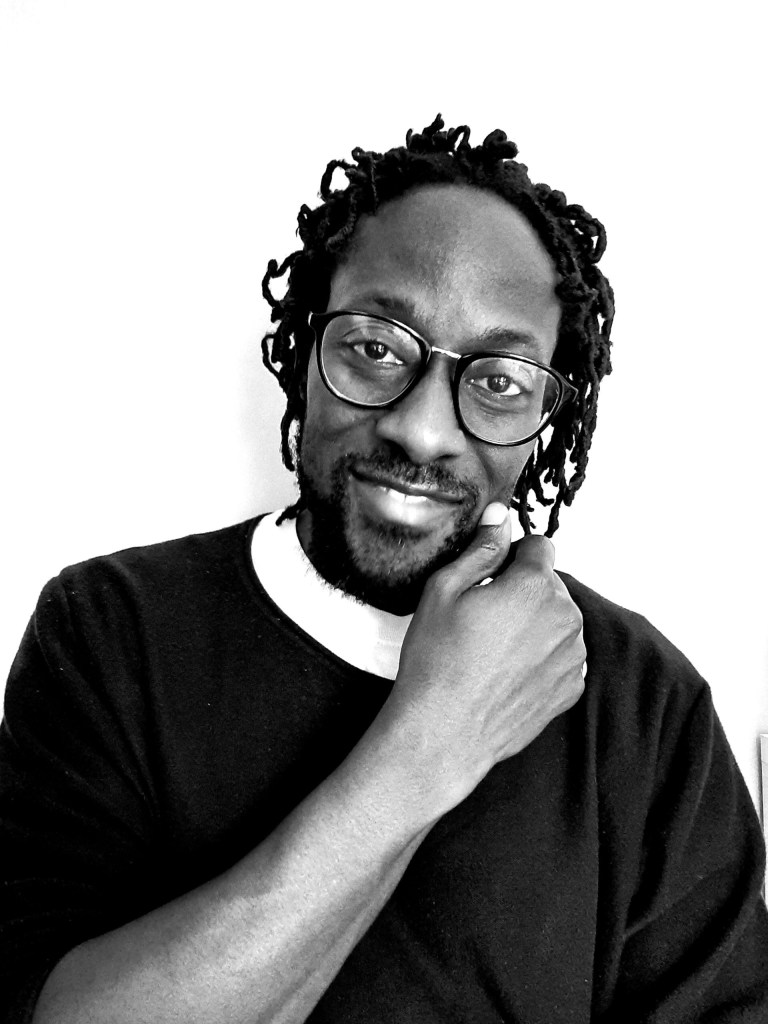
London based Ghanaian-British writer, editor and publisher, Nii Ayikwei Parkes is one of the UK’s leading black voices, winning critical acclaim as a poet, novelist, broadcaster, and children’s author.
His debut novel, Tail of the Blue Bird (Jonathan Cape, 2009), was hailed by the Financial Times as ‘a beautifully written fable… simple in form, but grappling with urgent issues,’ and lauded internationally, becoming a bestseller in Germany and notably winning France’s two major prizes for translated fiction – Prix Baudelaire and Prix Laure Bataillon – in 2014. He is also the author of two books for children – The Parade and Tales from Africa – under the pen name K.P. Kojo.
A published poet since 1999, his poem, ‘Tin Roof’, was selected for the Poems on the Underground initiative in 2007, followed by the poem ‘Barter,’ chosen from his first full poetry collection The Makings of You (2010). His 2020 poetry collection The Geez, was longlisted for the Rathbones Folio Prize, shortlisted for the Walcott Prizeand was a Poetry Book Society 2020 Recommendation, while his a Ga language book, The Ga Picture Alphabet was shortlisted for the 2021 Jhalak Children’s & YA Prize.
He is the author of the poetry chapbooks: his début eyes of a boy, lips of a man (1999), M is for Madrigal(2004), a selection of seven jazz poems; and Ballast (2009), an imagination of the slave trade by balloon.
In 2001 Nii Ayikwei Parkes founded flipped eye publishing, a UK based publishing house which focuses on voices from the margins of British society. As editor and publisher at flipped eye Nii has played a key role in developing poets including Inua Ellams, Malika Booker and Nick Makoha as well as publishing the débuts of award-winning writers including Roger Robinson, Warsan Shire and Nikesh Shukla.
Nii Ayikwei is the literature programmer for Brighton Festival the city’s annual multi-cultural arts festival and serves on the boards of World Literature Today and the AKO Caine Prize. Previously he has served as a judge for several literature prizes including the Commonwealth Prize, the NSK Neustadt Prize and the Harvill Secker Young Translators’ Prize. In 2014 he was named one of Africa’s 39 most promising authors of the new generation by the World Book Capital Africa 39 Project.
Outside of literature, Nii Ayikwei has written for publications such as the Financial Times, National Geographic, the Guardian and VICE, created adverts for the likes of Guinness and DHL, and modelled for Toyota and Ozwald Boateng.
Book blurb
Sonada Sun is the sweetest rice in the world, and on the mythical Caribbean Island of Fumaz two young lovers, Ghanaian-born, Caribbean-raised musician Yunior and Caribbean-American college student Emelina Santos, heiress of the Soñada dynasty, lock eyes at a fiesta yards from her family’s city home.
In the ensuring years Yunior and Emelina travel divergent journeys through history, music, myth and heartbreak; confronting the question of what it means to belong to a place or to another person. Several years later the two are united in a quest to save Emelina’s family’s plantation from closure. To succeed they must find a way to bring back to life a plantation with soil so saturated with sugar that it can no longer support crops.
Yunior brings the knowledge of a scientist, the skills of a farmer and the heart of a musician to life in Fumaz. As a farmer, he sees how much of his West African food has journeyed across the Atlantic to make the island’s unique cuisine; as a musician he becomes part of the spirit that puts the island on the world stage, out of all proportion to its size.
Love and death, harmony and conflict are the motives of a set of vividly drawn characters, brought alive by Parkes’ flowing, elegant and heartfelt prose, that alongside people, food and music moves freely back and forth across the seas between Africa and the Caribbean.
Nii Ayikwei Parkes says: “Azúcar is a book about belonging. Everyone knows what it is like to feel like you belong or not belong – or even partly belong. People who move from villages to cities understand what it’s like to go back home and feel like you will never quite fit in the same way at home again. Does that mean we don’t belong, or do we belong in multiple places in different ways?”
Publisher

Peepal Tree Press is an independent publisher of Caribbean and Black British writing. Its list includes the Caribbean Modern Classics series, fiction, poetry and non-fiction titles. Prize successes include the Costa Novel and Book of the Year Awards for The Mermaid of Black Conch by Monique Roffey; the T.S. Eliot Prize, for Roger Robinson’s A Portable Paradise; the Casa de la Américas Literary Award; the Clarissa Luard Award for innovation in publishing;, the OCM Bocas Prizes for Caribbean Literature; and the inaugural Jhalak Prize, awarded to Jacob Ross. Founded in 1985, Peepal Tree Press publishes around 18 books a year and has released over 400 books.
Peepal Tree Press|8th June 2023|£10.99|Paperback Original
Buy: Peepal Tree Press | Bookshop.org | AmazonSmileUK |Hive | Your local library | Your local bookshop